Part 3:Offshore Orcas The deep‑water mystery of the Pacific.
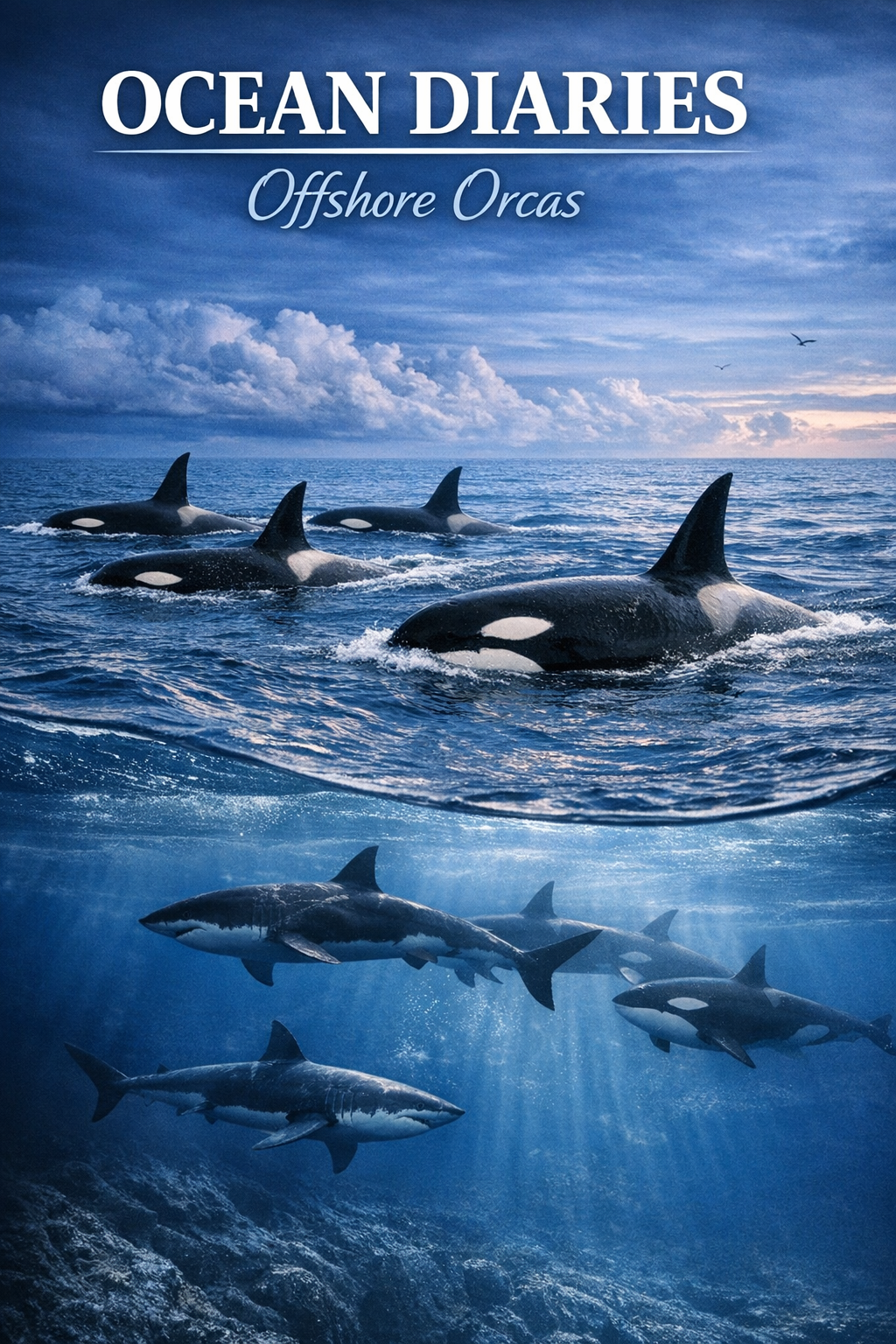
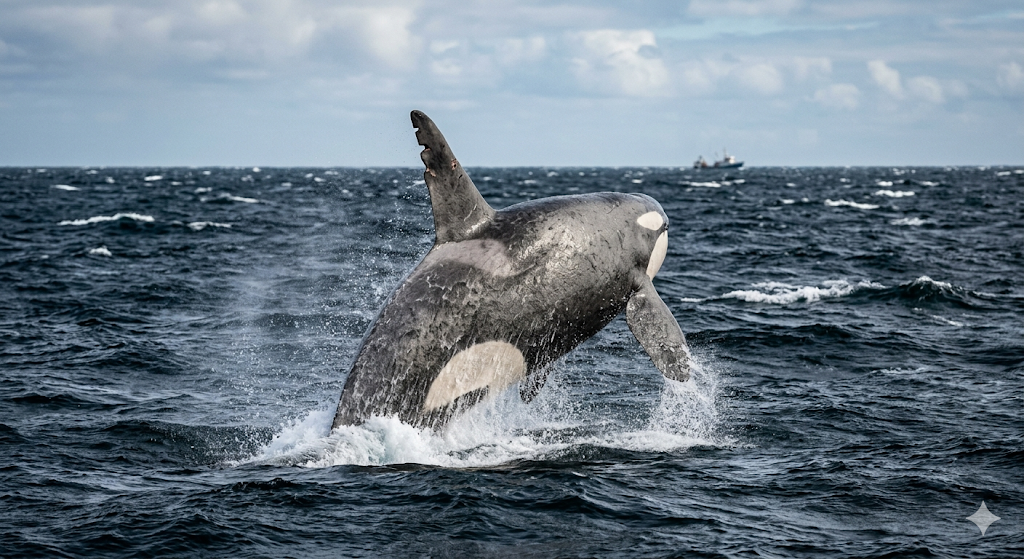
Offshore orcas are the most elusive and least understood ecotype in the North Pacific. Unlike Residents and Transients, these whales spend most of their lives far from shore, traveling in large groups across deep offshore waters. Their diet, behavior, and social structure set them apart — and their shark‑heavy menu has shaped their bodies in surprising ways.
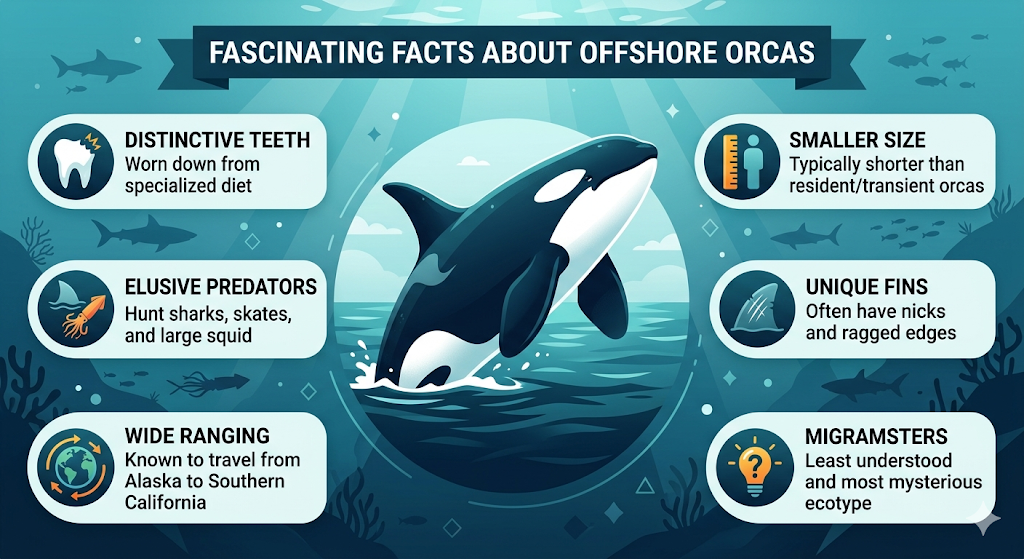
Offshores roam the open Pacific, often 30–100 miles from land.
They are most commonly found off:
- British Columbia
- Southeast Alaska
- Washington
- Oregon
- Northern California
Because they live so far from shore, sightings are rare and research is limited. Most of what we know comes from occasional encounters with large groups.
What Makes Offshores Unique
1. They Travel in Large Groups
Offshore orcas move in big pods of 20–75 whales, much larger than Resident or Transient groups.
These large pods may help them:
- protect calves
- coordinate hunts
- navigate long offshore routes
Their social structure is still not fully understood.
2. They Eat Sharks
Offshores are known for their shark‑heavy diet, including:
- Pacific sleeper sharks
- Salmon sharks
- Blue sharks
- Other large fish
Sharks contain high levels of urea and require powerful digestive systems — and this diet has a visible effect.
3. Their Teeth Are Worn Down
Because shark skin is extremely abrasive, Offshore orcas often have worn, rounded, or flattened teeth.
This is one of the clearest physical differences between them and other ecotypes.
4. They Are Hard to Study
Offshores:
- rarely approach boats
- spend most of their time in deep water
- travel long distances
- surface briefly and unpredictably
This makes them one of the least documented orca populations in the world.
Population Status
Offshore orcas are considered a threatened population in some regions due to:
- limited data
- potential exposure to toxins
- vulnerability to changes in shark populations
- low reproductive rates
Their exact population size is unknown, but estimates suggest a few hundred individuals across the eastern North Pacific.
Interesting Facts About Offshore Orcas
- They have distinct vocalizations different from Residents and Transients.
- Their dorsal fins often appear narrower and more curved.
- They may dive deeper than other ecotypes to pursue sharks and large fish.
- They sometimes travel with multiple large pods, forming “supergroups.”
- Their movements suggest they may migrate seasonally, but this is still being studied
Offshores represent a unique evolutionary path within the orca species.
Their shark‑based diet, offshore lifestyle, and large social groups show how adaptable and diverse orcas truly are.
Studying them helps scientists understand:
- deep‑ocean ecosystems
- predator‑prey dynamics
- how orcas evolve culturally and genetically
- how human activity affects offshore food webs
They are a reminder that the ocean still holds mysteries — even among its most iconic predators.

References & Further Reading
NOAA Fisheries — Offshore Killer Whales
https://www.fisheries.noaa.gov
DFO Canada — Offshore Ecotype Overview
https://www.pac.dfo-mpo.gc.ca
Marine Mammal Science Journal — Shark Predation Studies
https://marinemammalscience.org
Orca Network — Offshore Sightings
https://www.orcanetwork.org
