Dickie Chivell
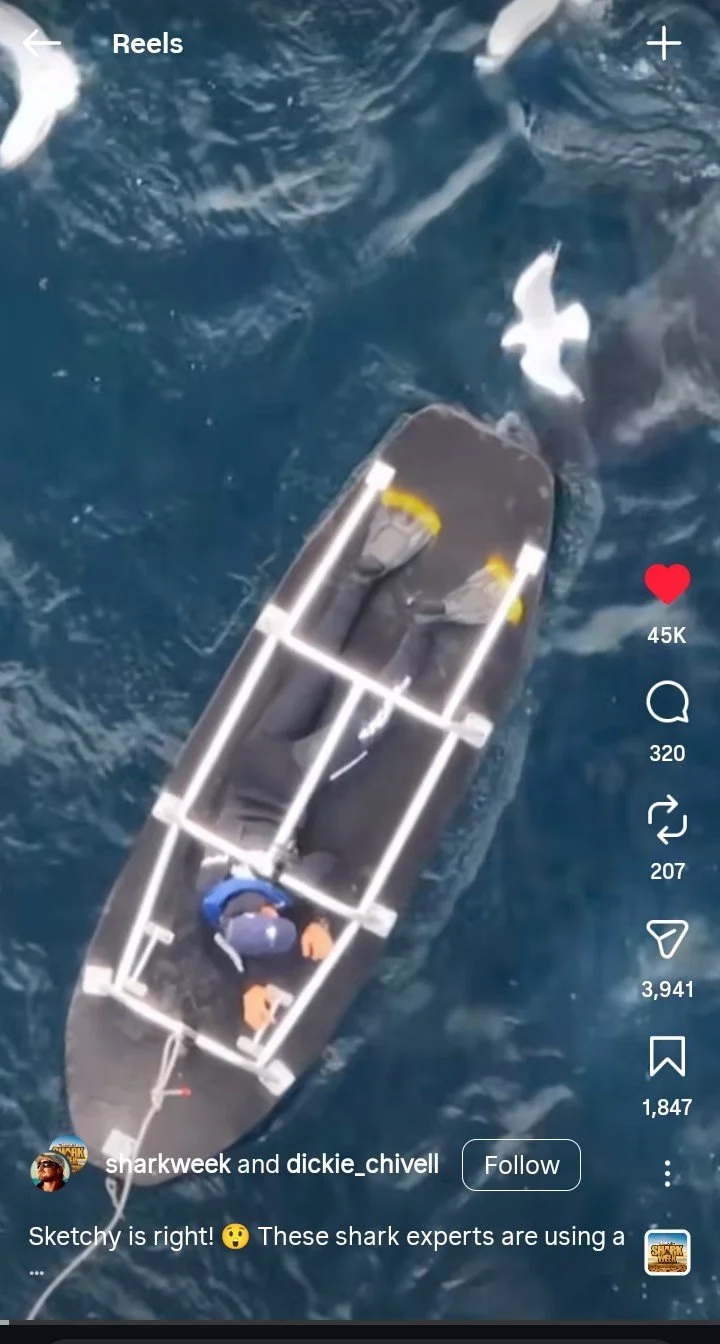
Dickie Chivell stands beside the custom-built sled he designed for shark research and filming, a rig that reflects both his innovation and his willingness to get close to the action. His work with specialized equipment like this sled has helped capture some of Shark Week’s most iconic great white footage.
Dickie Chivell a man who runs toward the ocean every single time. There are people who work in the ocean because it’s their job. And then there are people who work in the ocean because they can’t imagine being anywhere else. Dickie Chivell has always been the second kind. If you watch Shark Week closely, you’ll spot him not because he’s in the spotlight, but because he’s the first one to volunteer for anything that involves getting in the water. When the crew dreams up a new idea, Dickie is already moving toward the edge of the boat. If there’s a rig to test, he’s climbing onto it. If there’s a platform to try, he’s the one grabbing his gear. He doesn’t hang back or wait for someone else to go first. He runs toward the ocean with an energy that feels almost electric excited, curious, and ready to push boundaries even when the conditions are rough, the sharks unpredictable, and the stakes high. He isn’t calm or reserved. He’s eager, brave, and fully alive in the water. And that’s exactly why he belongs in Conservation Heroes.
Dickie grew up in Gansbaai, South Africa a coastline where the ocean doesn’t ask permission to be wild. It’s home to the Marine Big Five: great whites, whales, dolphins, seals, and African penguins. It’s also home to his family. His father, Wilfred Chivell, is a naturalist and conservationist who founded Marine Dynamics Tourism Group. His mother, Linda, and sister, Sanchia, complete a family whose life has always revolved around the sea. Dickie didn’t stumble into conservation; he was raised in it. And he carries that legacy with him everywhere he goes. South Africa’s marine environment is dangerous. The sharks are massive, the currents unforgiving, and the weather can turn in minutes. But Dickie doesn’t approach the ocean with fear he approaches it with curiosity. He wants to understand it, explore it, and push the limits of what’s possible.
His courage isn’t quiet or stoic. It’s the kind that looks like climbing onto a brand‑new shark cage design, testing an experimental rig, diving into unpredictable waters, and volunteering for the hardest, riskiest tasks. He says “I’ll do it” before anyone else, not because he wants attention, but because he genuinely wants to know what will happen. One of the most remarkable things about Dickie is his ability to build the very equipment that makes shark research and filming possible. He’s known for creating wild, experimental rigs that look like something out of a marine inventor’s workshop because they are.
His most iconic creation is the HORNET, a submerged, towed cage inspired by the original Seal Sled. It debuted in Air Jaws: Ring of Death, where Dickie climbed inside on scuba to watch great whites strike from below. He also built the Mini Seal Sled, featured in Air Jaws: Top Guns, a compact decoy platform designed for close‑range filming. And in Air Jaws: Fin of Fury, he famously rode a 14‑foot female shark decoy named Parthenope, capturing one of the most unforgettable moments in the franchise. Across episodes like Air Jaws: Breach, Strikes Back, and Ultimate Breach, Dickie’s seal‑sled variants and experimental platforms have helped filmmakers study predation from angles no one had ever attempted before.If the crew imagines something new, Dickie is the one who says, “I’ll build it,” and then, “I’ll test it.” This hands‑on innovation is part of what makes him unforgettable.
Dickie is a certified commercial diver, skipper, scuba instructor, and marine guide but he’s also a storyteller. His camera work, his underwater rigs, and his experimental platforms are all part of a mission bigger than television. He wants people to care. He wants people to see sharks the way he does not as monsters, but as ancient, intelligent, essential parts of the ocean. That’s why he’s been part of Shark Week since 2014. Not because he wants fame, but because he wants impact. If you look closely, you’ll spot him in many expeditions: testing a new cage, adjusting a camera housing, securing gear, briefing the team, diving first, and filming the moment everyone else remembers. He’s the guy behind the scenes who makes the scenes possible the one who turns ideas into reality and danger into discovery. That’s heroism most people never see.
Dickie’s conservation impact is also seen in the day‑to‑day work that never makes it onto television. He has assisted in rescuing stranded marine animals along the South African coastline, supported rehabilitation efforts for injured African penguins at the African Penguin & Seabird Sanctuary, and helped maintain long‑term monitoring stations that track ocean temperature, prey movement, and shark presence around Dyer Island. His role as a skipper places him at the center of real‑time wildlife response, from documenting unusual shark behavior to reporting ecological changes that help scientists understand shifting ocean conditions. These quiet, behind‑the‑scenes efforts form the backbone of conservation the steady, consistent work that protects marine life long before cameras ever arrive.
His work has also taken him far beyond South Africa. He has studied gray whales in Baja, filmed marine life in New Zealand, explored shark habitats in California, and dived in Guadalupe Island. He has collaborated with legends like Chris Fallows, Jeff Kurr, and Andy Casagrande. But no matter where he goes, he carries Gansbaai with him its wildlife, its challenges, its beauty, and its urgency. His heart never leaves home.
What makes Dickie a Conservation Hero isn’t just his skill. It’s his humanity. He’s kind, humble, and grounded. He answers messages politely. He offers help without hesitation. He treats people with respect and the ocean with reverence. He isn’t trying to be a star. He’s trying to be useful. And that’s what makes him extraordinary. Heroism isn’t about being fearless. It’s about being willing. Courage isn’t about being calm. It’s about showing up excited, ready, and unafraid to try. Conservation isn’t about fame. It’s about protecting what matters. Dickie Chivell embodies all of it the heart, the grit, the curiosity, the humility, the devotion, and the wild enthusiasm that define true ocean guardians.
He is a reminder that the world’s greatest heroes aren’t always the ones in front of the camera. Sometimes, they’re the ones behind it volunteering first, diving first, testing first, and protecting the ocean one day at a time. Dickie shares much of his photography, videos, and behind‑the‑scenes conservation work on his Instagram, @dickie_chivell, where viewers can follow his expeditions, rig tests, shark encounters, and daily life on the water. His profile links directly to the African Penguin & Seabird Sanctuary a quiet reminder that even online, he chooses to spotlight conservation over himself.
We deeply appreciate Dickie Chivell, not just for the work he does, but for the way he does it: with courage, curiosity, kindness, humility, and a willingness to go first. With a love for the ocean that inspires everyone who sees his work. He is, without question, a true Conservation Hero.
References:
Marine Dynamics Academy. (n.d.). Dickie Chivell – Skipper.
https://marinedynamics.org/academy/about/crew/dickie-chivell/
(marinedynamics.org)
Marine Dynamics. (n.d.). Marine Dynamics Shark Tours.
https://marinedynamics.org
Dyer Island Conservation Trust. (n.d.). African Penguin & Seabird Sanctuary.
https://dict.org.za
Chivell D. (n.d.). Instagram profile.
https://www.instagram.com/dickie_chivell
Discovery Channel. (2014–2024). Shark Week [Television series].
Warner Bros. Discovery.
Further Reading:
Chivell, D. (n.d.). Instagram profile. Instagram.
https://www.instagram.com/dickie_chivell
Dyer Island Conservation Trust. (n.d.). African Penguin & Seabird Sanctuary.
https://dict.org.za
Marine Dynamics Academy. (n.d.). Dickie Chivell – Skipper.
https://marinedynamics.org/academy/about/crew/dickie-chivell/ (marinedynamics.org)
Discovery Channel (2014-2024) Shark Week
https://www.discovery..com/shark-week
Air Jaws returns
https://www.yahoo.com/entertainment/shark-week-air-jaws-breach-shweekend-air-jaws-123567301020.htmlThrillist. (2021, January 26).
Check out all of Dickie’s work on his Instagram.
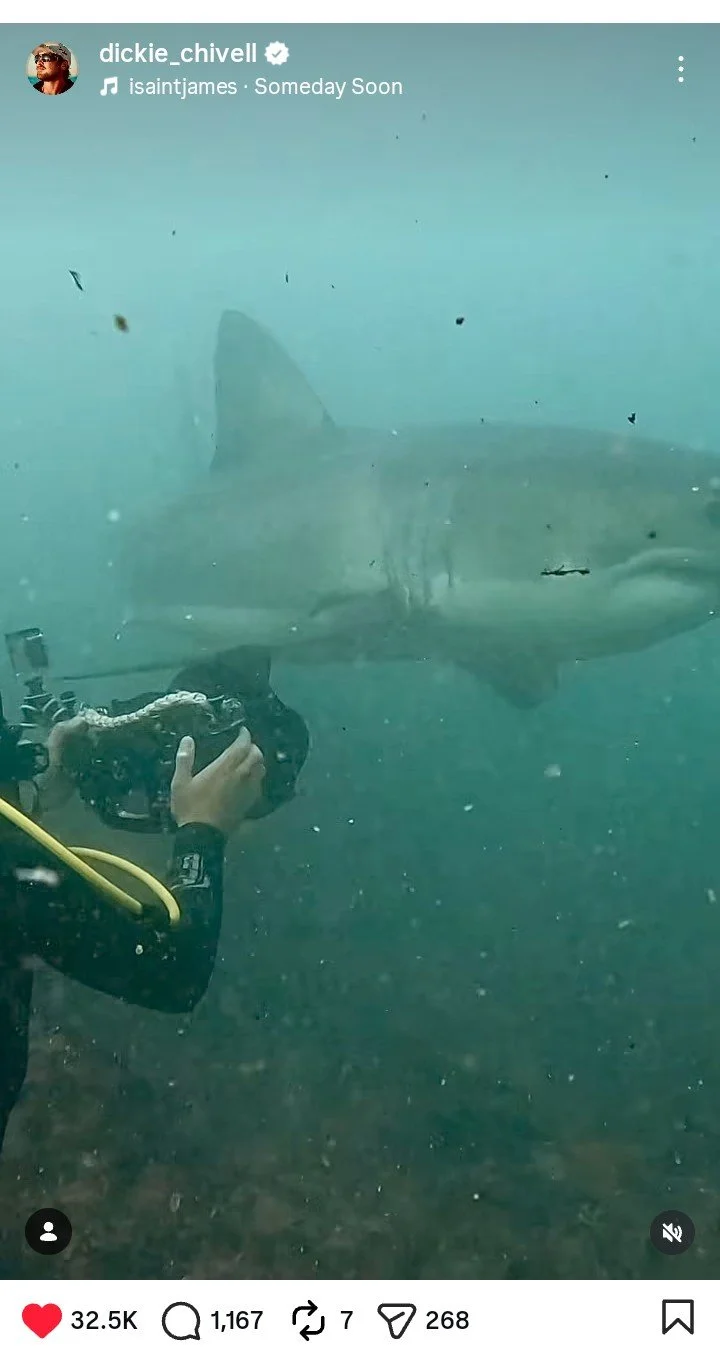
Photo by Dickie Chivell
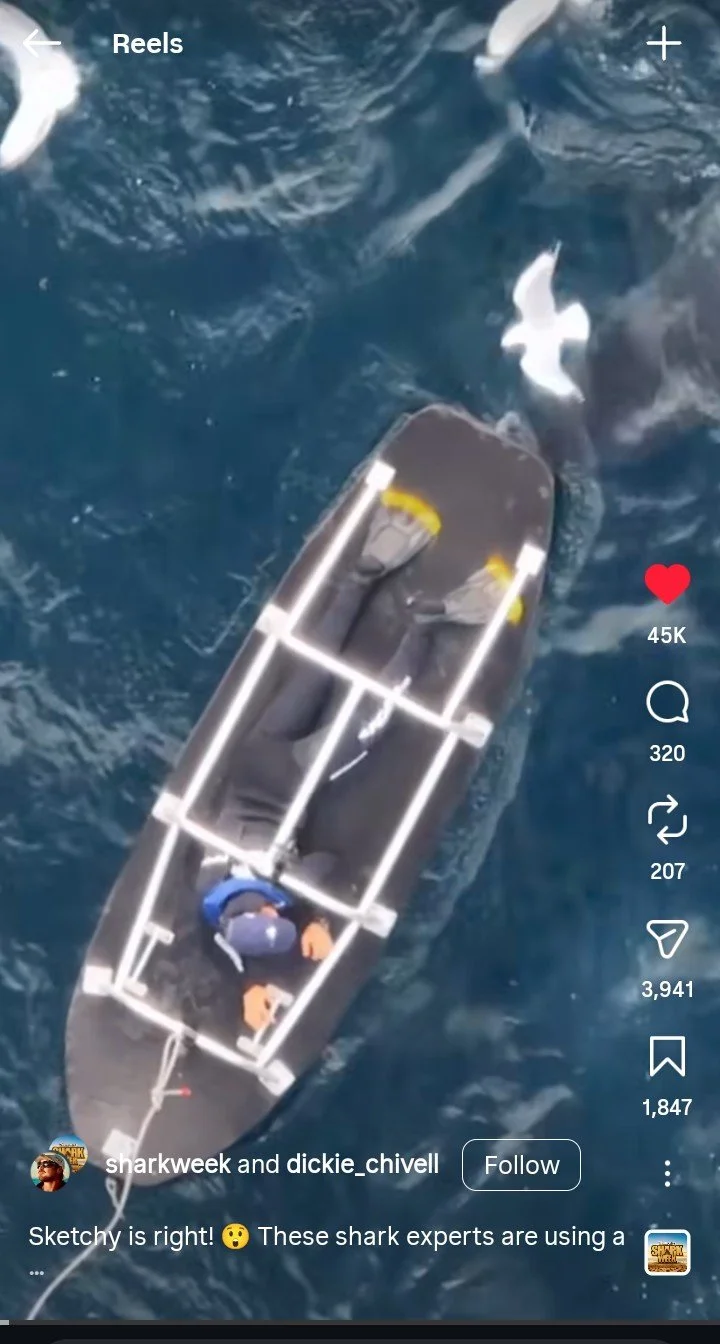
Photo of Dickie Chivell, courtesy of https://www.instagram.com/dickie_chivell (instagram.com)
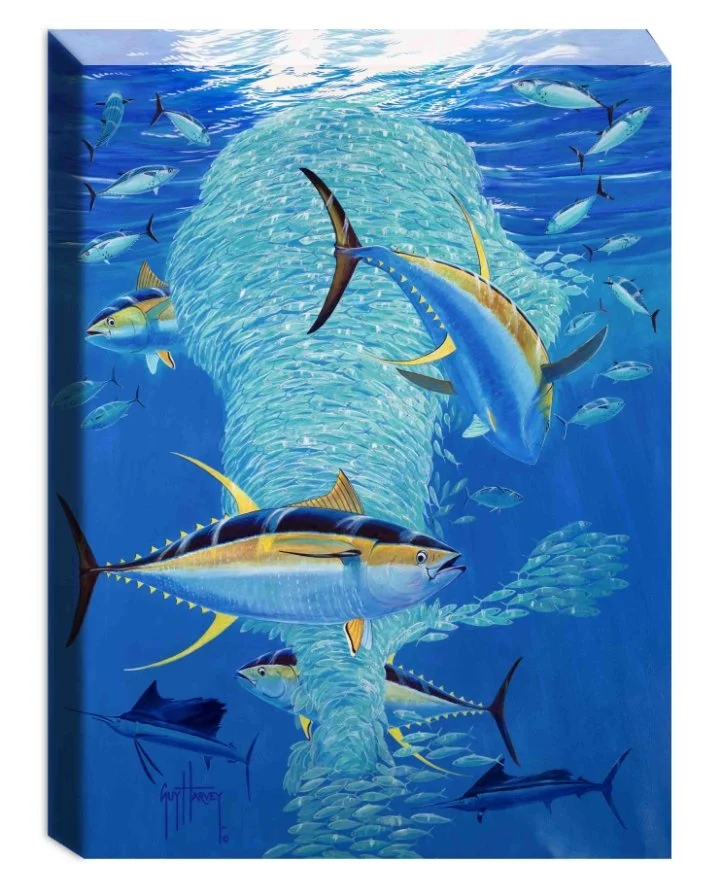
Dr. Guy Harvey
Dr. Guy Harvey grew from a curious Jamaican boy sketching sharks into one of the most influential marine conservationists of our time. Blending art, science, and a lifelong devotion to the ocean, Harvey’s work has transformed how we understand sharks, inspired millions to care about marine life, and funded research that protects the sea he fell in love with as a child.
Dr. Guy Harvey’s story begins long before the research institutes, the conservation foundation, or the world‑famous artwork. It begins with a boy in Jamaica who couldn’t stop staring at the ocean. Growing up surrounded by turquoise shallows and deep blue drop‑offs, Harvey felt drawn to the water in a way that never faded. While other children chased games and noise, he chased fish. He sketched them, studied them, followed them, and asked questions most adults couldn’t answer.
That early curiosity became the foundation of his life’s work. Harvey didn’t choose the ocean because it was beautiful. He chose it because it was alive. It was mysterious. It was full of creatures that deserved to be understood rather than feared. His fascination began with sharks not as monsters, but as misunderstood predators with purpose, intelligence, and grace. He often described sharks as the perfect blend of beauty and biology, and that combination shaped everything he became: an artist, a scientist, a conservationist, a storyteller, and ultimately one of the ocean’s most influential defenders.
Before the research and the tagging programs, Harvey’s first impact came from a pencil. His shark drawings were so detailed and lifelike that people stopped to stare. His art captured the imagination of the public and opened the door to conversations about ocean life, conservation, and the importance of protecting marine species. Art made people care. Science gave them reasons. Harvey used both.
He went on to earn a PhD in fisheries biology, turning passion into expertise. His research focused on the great wanderers of the open ocean tiger sharks, oceanic whitetips, shortfin makos, billfish, and other pelagic species whose lives unfold far from shore. Through the Guy Harvey Research Institute, he helped pioneer satellite tagging programs that revealed the secret migrations of sharks across entire oceans. His work showed how far makos travel, how tiger sharks navigate reefs and open water, how oceanic whitetips roam the high seas, and how vulnerable these species are to overfishing.
These discoveries changed what scientists knew about shark behavior and now guide conservation policy worldwide. Harvey’s legacy extends far beyond research. His foundation supports youth ocean education, habitat restoration, responsible fishing practices, coral reef protection, and marine science scholarships. His artwork funds conservation. His science informs it. His voice amplifies it. His mission has always been simple: protect what you love, teach what you know, and inspire who you can. Today Dr. Guy Harvey stands as a reminder that ocean heroes don’t all come from laboratories or government offices. Some come from childhood curiosity, a sketchbook, and a lifelong promise to defend the sea. He chose the ocean because it chose him first and he spent his life giving back to the place that shaped him.
Sources & Further Reading:
For readers who want to explore Dr. Guy Harvey’s work more deeply, several reputable resources offer insight into his research, artwork, and conservation mission. The Guy Harvey Foundation provides extensive information on current projects, educational programs, and marine conservation initiatives at:
https://guyharvey.com/pages/guy-harvey-foundation (guyharvey.com in Bing).
The Guy Harvey Research Institute, operated through Nova Southeastern University, publishes shark tagging results, migration maps, and scientific updates that highlight Harvey’s contributions to fisheries biology; their research can be found at;
https://ghri.nova.edu. To explore Harvey’s artwork and its role in funding conservation, his official gallery showcases decades of marine illustrations and paintings at:
https://guyharvey.com/pages/art.
Nova Southeastern University also maintains a detailed overview of Harvey’s academic background, research collaborations, and scientific publications at:
https://www.nova.edu/guy-harvey/index.html.
For readers interested in broader shark conservation topics connected to Harvey’s work, the International Union for Conservation of Nature (IUCN) provides species assessments for makos, tiger sharks, oceanic whitetips, and other pelagic predators at:
https://www.iucnredlist.org. Additional context on shark migration and tagging technology can be found through the Save Our Seas Foundation at:
https://saveourseas.com. These sources offer a deeper look at the science, art, and conservation legacy that define Dr. Guy Harvey’s impact on the ocean.
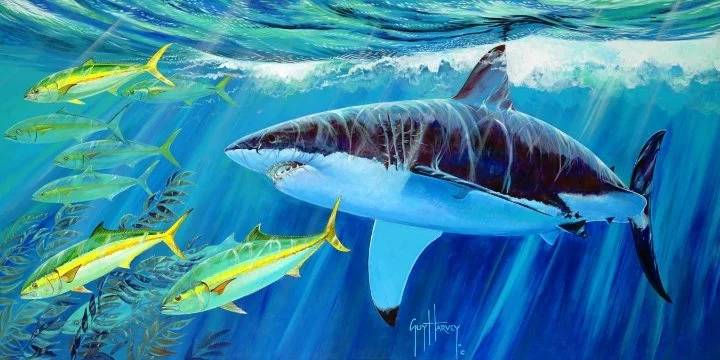
Guy Harvey painting of a Great White
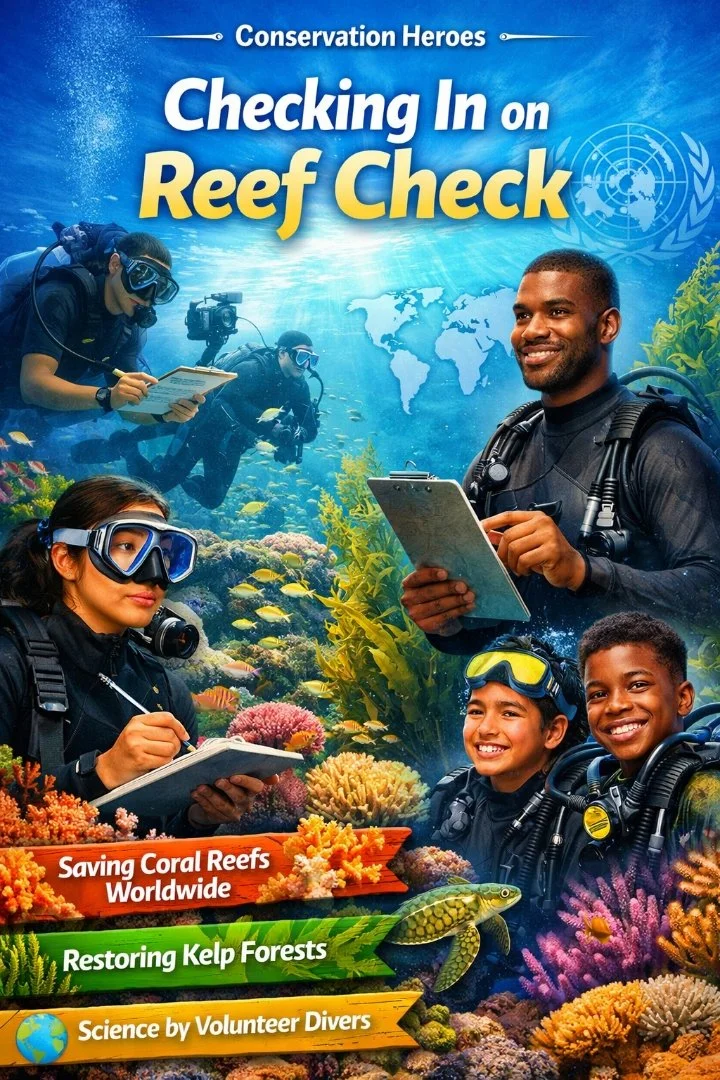
Checking In on Reef Check
Reef Check volunteers document coral and kelp ecosystems through hands‑on citizen science, showing how everyday divers help protect the ocean’s most threatened habitats.
Reef Check began with a simple question: How bad is the damage to the world’s coral reefs?
In 1996, marine ecologist Dr. Gregor Hodgson founded the organization to find out — and what they discovered changed marine conservation forever.
Today, Reef Check operates in 80+ countries, trains thousands of volunteer divers, and runs the largest citizen‑science kelp forest monitoring program in the world. Their work proves that ordinary people can generate extraordinary scientific impact.
Where It All Began (1996–1997)
In the mid‑1990s, scientists suspected coral reefs were declining, but no one had global data to confirm it. Dr. Hodgson believed that trained volunteers could fill that gap.
So in 1997, Reef Check launched the first-ever global survey of coral reef health.
What they found
- Reefs were being damaged worldwide by overfishing, pollution, and human activity.
- The results, published in 1999, provided the first scientific proof of global reef decline.
- The findings shocked the scientific community — the scale of damage was far worse than expected.
This moment established Reef Check as a global authority in community-based reef monitoring.
The Landmark 5‑Year Report (2002)
In 2002, Reef Check released The Global Coral Reef Crisis – Trends and Solutions (1997–2001) at the World Summit on Sustainable Development.
It was the first scientific documentation of global reef decline over a five‑year period, based on data from 80+ countries.
Key conclusions
- Almost no reef on Earth remained untouched by human impacts.
- Reefs can recover when communities monitor, protect, and manage them.
This report helped shift global policy conversations toward community-driven conservation.
What Reef Check Does Today
Reef Check now runs three major programs that span both tropical and temperate ecosystems.
1. Tropical Coral Reef Program
- Uses a standardized survey method in 102 countries and territories.
- Data is used by scientists, governments, and marine managers.
- Helps track coral bleaching, overfishing, pollution, and reef recovery.
This is one of the largest coral reef monitoring networks in the world.
2. Kelp Forest Monitoring Program (2005–Present)
Reef Check expanded into temperate ecosystems in 2005, launching a program to support California’s Marine Protected Area (MPA) design.
Today, it is the largest scuba-based citizen-science kelp forest program in existence.
Key milestones:
- 2016: Added ocean temperature monitoring at 75+ sites.
- 2020: Began community-based kelp restoration to combat ecosystem collapse.
This program is now essential for understanding climate impacts on West Coast kelp forests.
3. Dive Into Science (2019)
Launched in 2019, this program increases equity in marine science by training:
- Tribal youth
- Foster youth
- Low-income communities
- Communities of color
Participants learn scuba, scientific diving, and marine ecology — opening doors to conservation care
Why Reef Check Is a Conservation Hero
Reef Check stands out because they combine science, community, and hope:
- They democratized marine science, proving volunteers can produce high-quality data.
- Their work helped shape California’s statewide Marine Protected Area network.
- They provide global-scale monitoring that scientists and policymakers rely on.
- They empower communities to protect the ecosystems they depend on.
- They show that reefs and kelp forests can recover when people get involved.
Reef Check isn’t just collecting data — they’re building a global movement of ocean stewards.
Quick Facts:
- Founded: 1996
- Founder: Dr. Gregor Hodgson
- First global survey: 1997
- Countries involved: 80+ (coral), 102 (EcoDiver teams)
- UN Role: Official community-based coral reef monitoring program
- Kelp program launched: 2005
- Climate monitoring added: 2016
- Kelp restoration began: 2020
- Youth access program: Dive Into Science (2019)
References:
Reef Check Foundation. (1999). Reef Check 1997–1999 Global Survey Results. Reef Check.
https://www.reefcheck.org
Reef Check Foundation. (2002). The Global Coral Reef Crisis: Trends and Solutions 1997–2001. Reef Check.
https://www.reefcheck.org
Reef Check Foundation. (n.d.). About Reef Check. Reef Check.
https://www.reefcheck.org/about-us/
Reef Check Foundation. (n.d.). Tropical Program. Reef Check.
https://www.reefcheck.org/tropical-program/ (reefcheck.org in Bing)
Reef Check Foundation. (n.d.). Kelp Forest Program. Reef Check.
https://www.reefcheck.org/kelp-forest-program/ (reefcheck.org in Bing)
Reef Check Foundation. (n.d.). Dive Into Science. Reef Check.
https://www.reefcheck.org/dive-into-science/ (reefcheck.org in Bing)
United Nations Environment Programme. (2002). World Summit on Sustainable Development: Coral Reef Monitoring. UNEP.
https://www.unep.org
California Department of Fish and Wildlife. (n.d.). Marine Protected Area Monitoring. CDFW.
https://wildlife.ca.gov/Conservation/Marine/MPAs (wildlife.ca.gov in Bing)
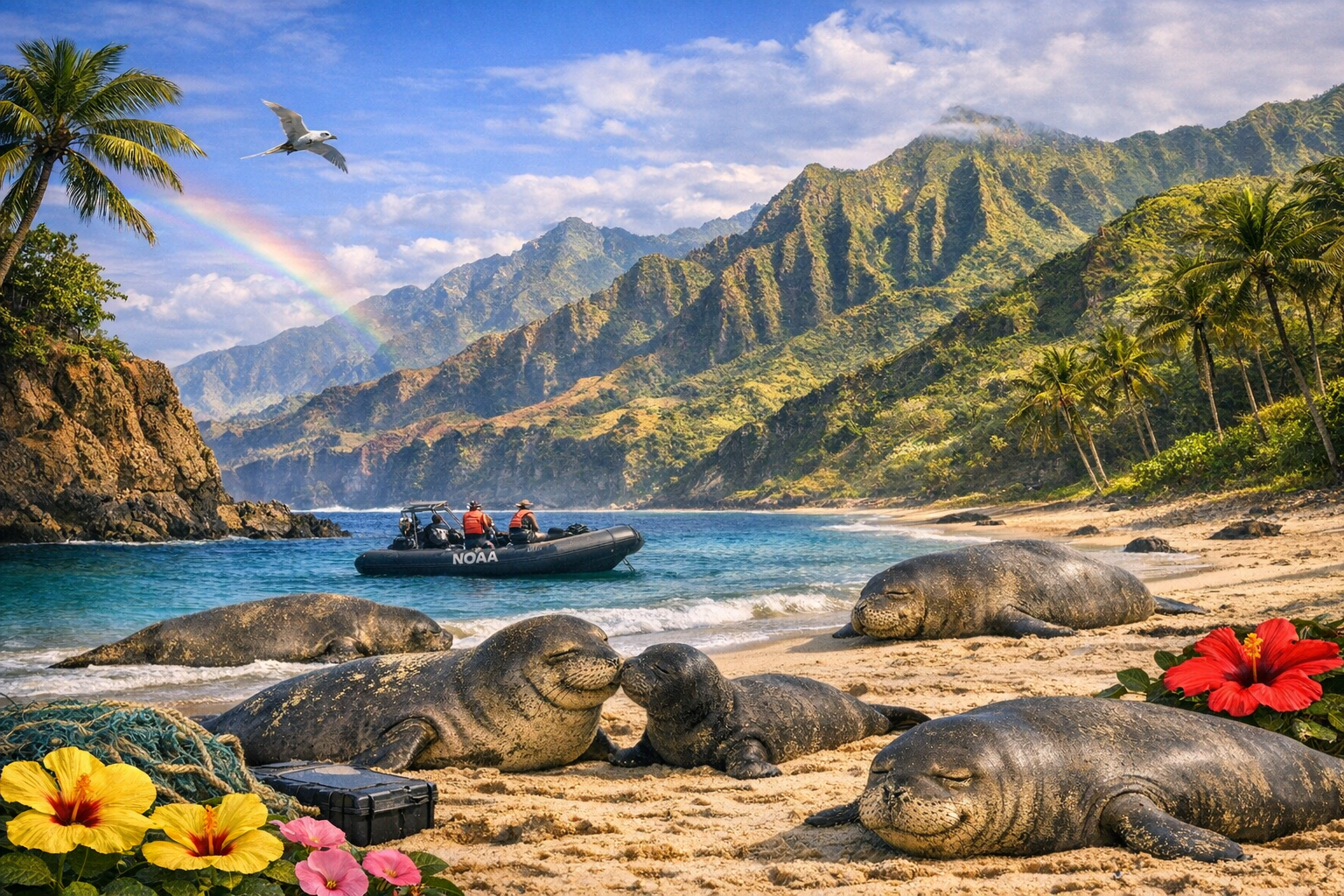
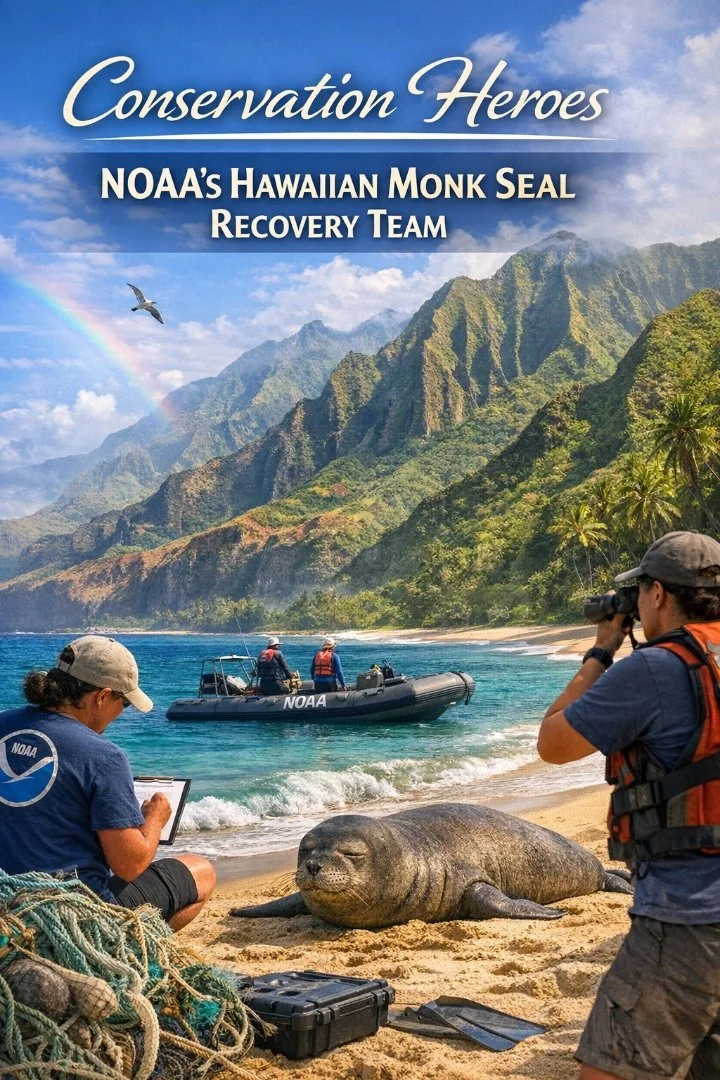
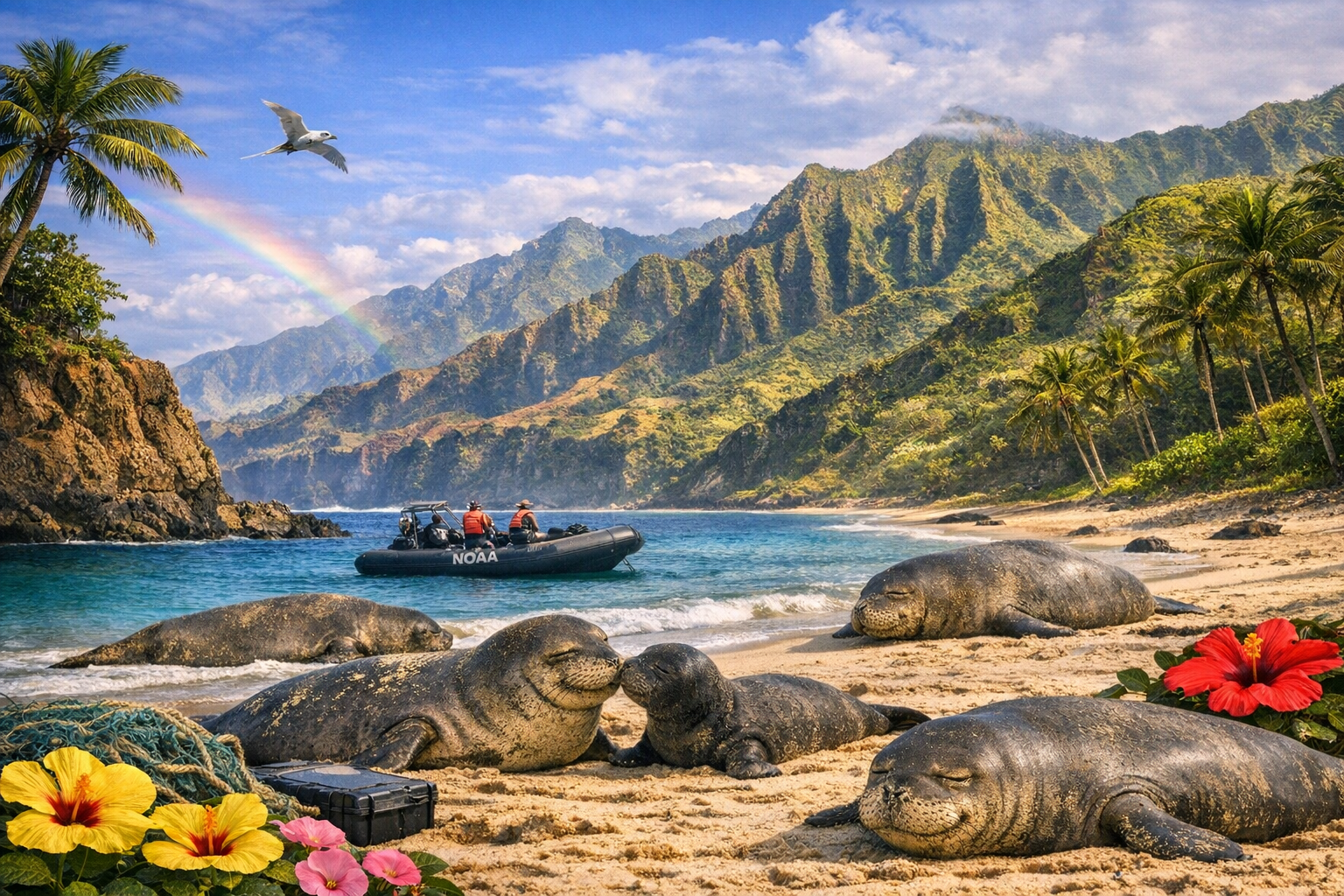
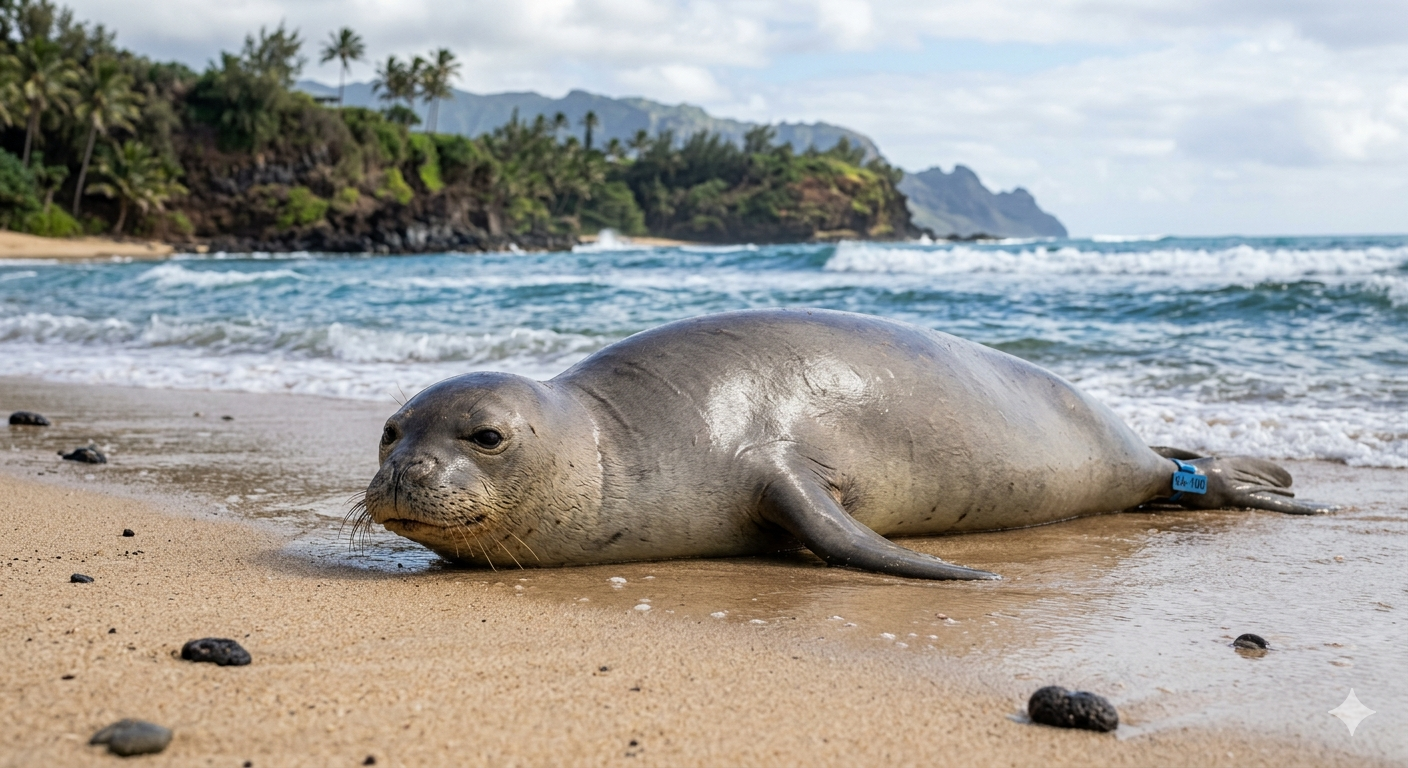
NOAA’s Hawaiian Monk Seal Recovery Team
Once on the brink, Hawaiian monk seals are slowly rebounding thanks to decades of focused recovery work across the Hawaiian archipelago.
References
NOAA Fisheries. (2024). Hawaiian Monk Seal.
https://www.fisheries.noaa.gov/species/hawaiian-monk-seal (fisheries.noaa.gov in Bing)
Pacific Islands Fisheries Science Center. (2025). Hawaiian Monk Seal Population Summary 2024.
https://www.fisheries.noaa.gov/pacific-islands/hawaiian-monk-seal-population-summary (fisheries.noaa.gov in Bing)
NOAA Fisheries. (2022). Hawaiian Monk Seal Population Surpasses 1,500!
https://www.fisheries.noaa.gov/feature-story/hawaiian-monk-seal-population-surpasses-1500 (fisheries.noaa.gov in Bing)
NOAA Fisheries. (n.d.). Threats to Hawaiian Monk Seals.
https://www.fisheries.noaa.gov/hawaii-marine-mammals/threats-hawaiian-monk-seals (fisheries.noaa.gov in Bing)
NOAA Fisheries. (n.d.). Hawaiian Monk Seal Recovery Efforts.
https://www.fisheries.noaa.gov/hawaii-marine-mammals/hawaiian-monk-seal-recovery-efforts (fisheries.noaa.gov in Bing)
The Hawaiian monk seal is one of the rarest marine mammals on Earth, and its survival depends on a small group of dedicated people working behind the scenes every single day. NOAA’s Hawaiian Monk Seal Recovery Team is one of the most important forces protecting this species from extinction. Their work spans the entire Hawaiian archipelago, from remote islands to busy public beaches, and every action they take is designed to give this species a fighting chance.
This team responds to injured or entangled seals, rescues abandoned pups, and rehabilitates sick animals so they can return to the wild. They monitor seal populations, track health trends, and study threats like marine debris, disease, and habitat loss. Their fieldwork is demanding — long days, remote camps, unpredictable weather — but their efforts have directly saved hundreds of seals over the years.
One of their biggest successes has been the rescue and rehabilitation of vulnerable pups. Without intervention, many of these young seals would not survive. Thanks to NOAA’s team and their partners, dozens of pups are now thriving adults contributing to the population’s slow but steady recovery. Their work proves that conservation isn’t just research — it’s hands‑on, life‑saving action.
Beyond rescue work, the team also leads public education and community outreach. They teach beachgoers how to give seals space, help reduce human‑wildlife conflict, and work with local communities to protect critical habitat. Every conversation, every cleanup, and every reported sighting strengthens the connection between people and the species that depend on them.
The Hawaiian monk seal still faces serious challenges, but NOAA’s Recovery Team shows what’s possible when science, compassion, and persistence come together. They are true conservation heroes — and their work reminds us that saving a species is never the job of one person, but the commitment of many.
Marine Megafauna Foundation (MMF)
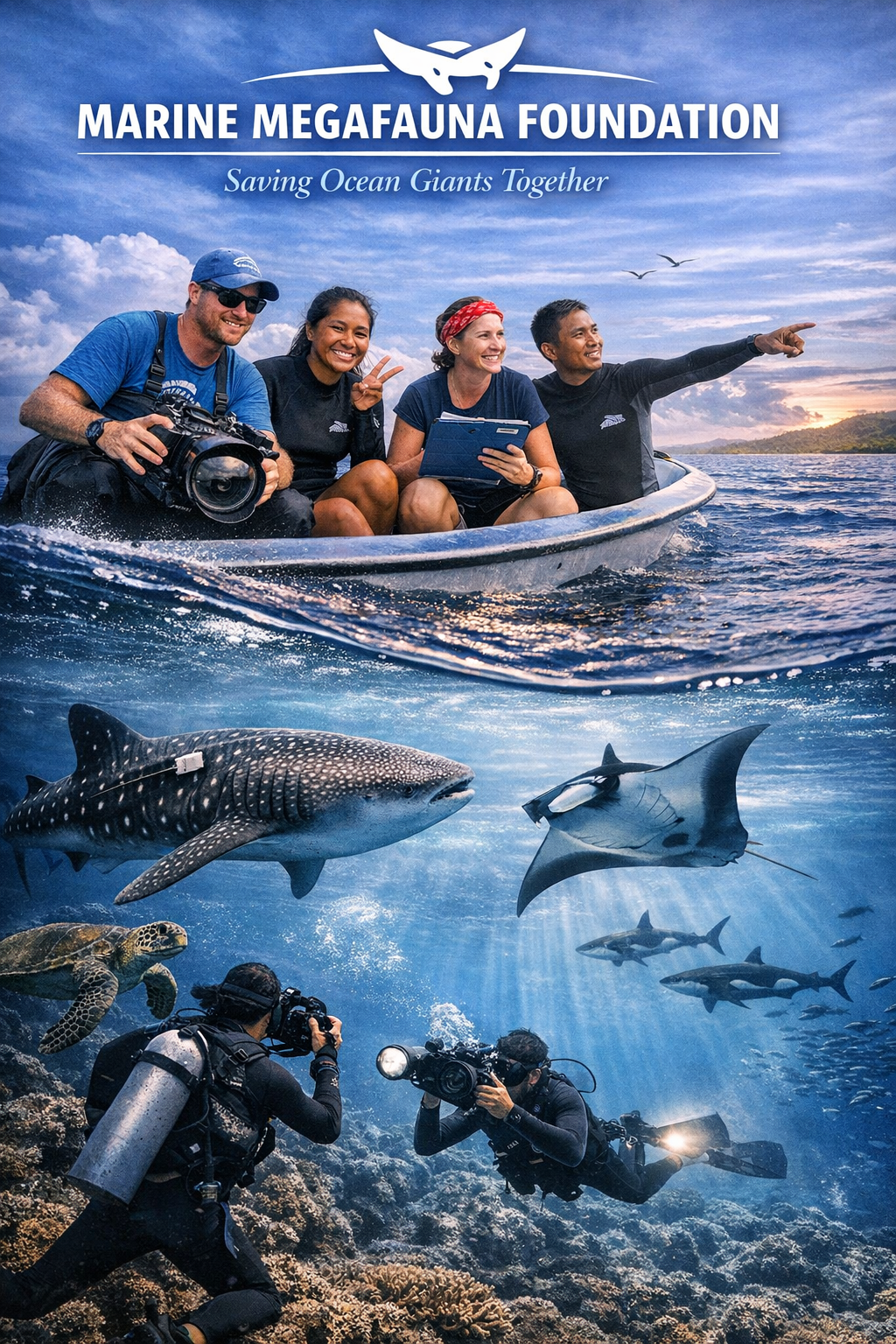
The Marine Megafauna Foundation empowers everyday divers to become ocean researchers. Founded by Dr. Andrea Marshall and Dr. Simon Pierce, MMF transforms tourism into conservation through citizen‑science training that helps track manta rays and whale sharks across the globe. From Mozambique to Indonesia, their work proves that protecting ocean giants begins with curiosity, compassion, and a camera.
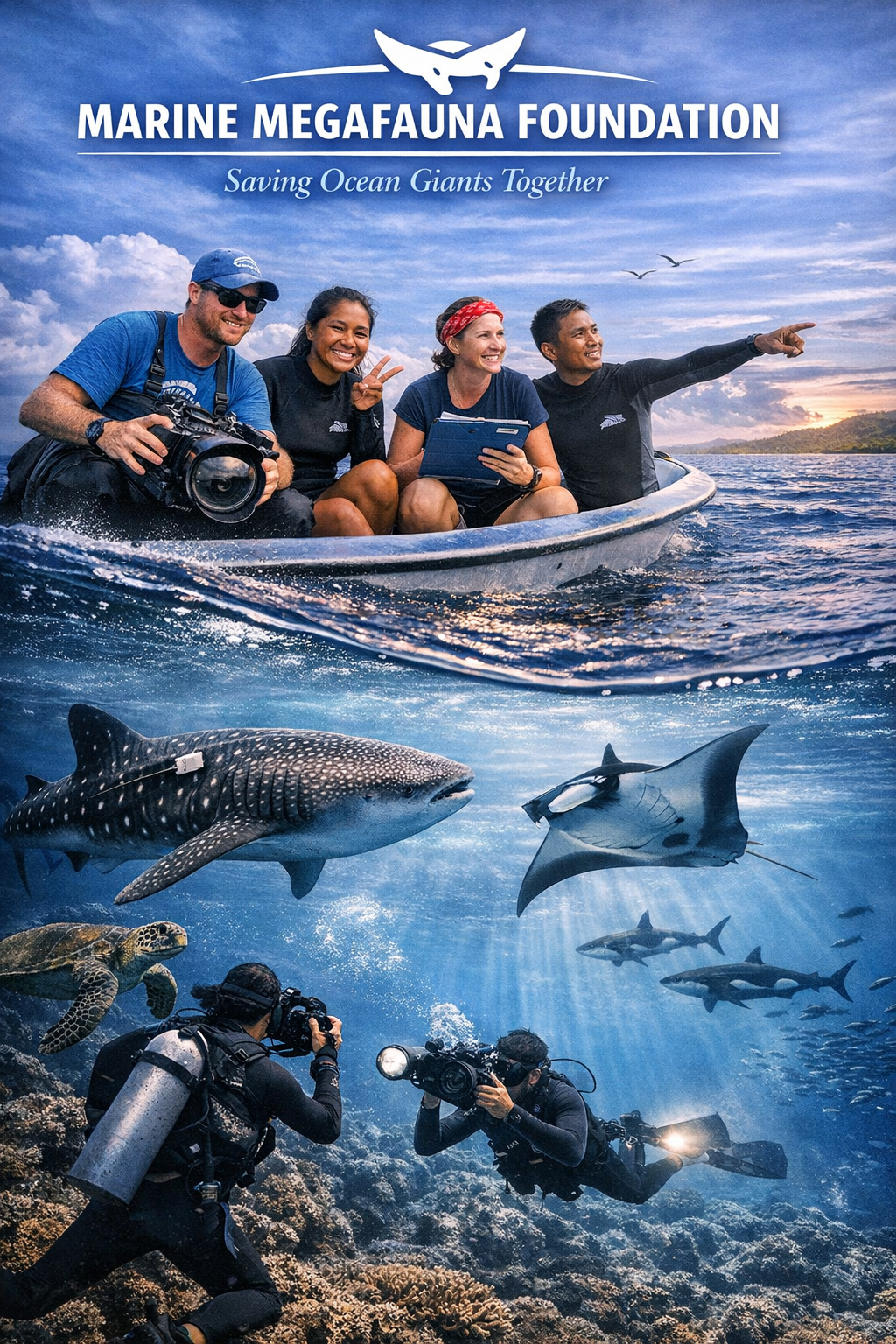
Founded by Dr. Andrea Marshall and Dr. Simon Pierce, MMF protects ocean giants like manta rays and whale sharks through research, education, and citizen‑science diving programs. Based in Mozambique with global outreach across Indonesia and Canada.
Marine Megafauna Foundation (MMF)
Organization: Marine Megafauna Foundation (MMF)
Location: Praia Tofo, Inhambane Province, Mozambique
Website: https://www.marinemegafaunafoundation.org
Email: info@marinemegafaunafoundation.org
Social:
- Instagram: @marinemegafauna
- Facebook: Marine Megafauna Foundation
- YouTube: Marine Megafauna Foundation
MMF Quick Facts:
Founded: 2009
Focus: Manta rays • Whale sharks • Ocean giants
Why They Matter:
MMF trains everyday divers to collect real research data — turning tourism into conservation.
By the Numbers:
- 12,000+ photo‑ID submissions
- 2,000+ manta rays identified
- 1,200+ whale sharks tracked
- 30+ countries contributing data
How Divers Help:
Take ID photos, log sightings, record depth & GPS, report injuries.
Global Hubs:
Mozambique • Indonesia • Canada
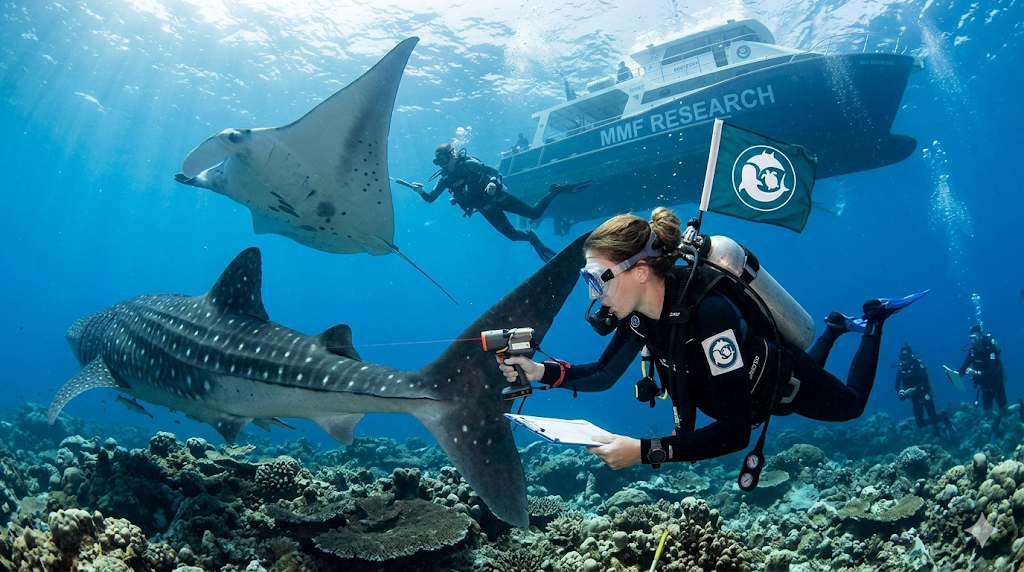
Empowering everyday divers to protect the ocean’s giants.
The Marine Megafauna Foundation (MMF) was founded in 2009 by marine biologist Dr. Andrea Marshall, known as the Queen of Mantas, and Dr. Simon Pierce, a whale‑shark specialist. Their mission is simple yet profound — to protect ocean giants like manta rays and whale sharks through research, education, and community engagement (Marshall & Pierce, 2010).
Teaching Divers to Become Citizen Scientists
MMF’s outreach programs train recreational divers to collect usable scientific data. Divers learn how to:
- Photograph manta rays and whale sharks for photo‑ID databases (MMF, 2023)
- Record GPS coordinates and depth for habitat mapping
- Log sightings and behaviors into open‑source research platforms
- Report injuries or entanglements to local conservation teams
This approach transforms tourism into science — every dive becomes a data point that helps researchers track migration, reproduction, and population health (Pierce et al., 2018).
Impact by the Numbers
- Over 12,000 citizen‑scientist submissions to MMF’s manta and whale‑shark databases (MMF, 2024)
- More than 30 countries involved in collaborative tagging and monitoring
- Whale‑shark population trends now measurable in Mozambique and Indonesia thanks to diver‑collected imagery
- Manta‑ray protection laws enacted in multiple nations following MMF research (Marshall et al., 2019)
By teaching divers to observe, record, and report, MMF bridges the gap between recreation and conservation. It proves that ocean protection isn’t limited to scientists — it’s powered by anyone willing to look closer, log carefully, and care deeply.
References & Further Reading
Marine Megafauna Foundation — Official Research & Programs
https://www.marinemegafaunafoundation.org
Marine Megafauna Foundation — Education & Community Initiatives
https://www.marinemegafaunafoundation.org/education
Marine Megafauna Foundation — Whale Shark Conservation
https://www.marinemegafaunafoundation.org/whale-sharks
Marine Megafauna Foundation — Manta Ray Research
https://www.marinemegafaunafoundation.org/manta-rays
UNESCO — Ocean Literacy & Community Science Programs
https://oceanliteracy.unesco.org
NOAA Fisheries — Whale Shark Species Profile
https://www.fisheries.noaa.gov/species/whale-shark
NOAA Fisheries — Manta Rays Overview
https://www.fisheries.noaa.gov/species/manta-ray
PLOS One — Citizen Science Accuracy in Marine Monitoring
https://journals.plos.org/plosone
(Peer‑reviewed studies showing high accuracy of citizen‑collected ecological data.)
IUCN Red List — Manta Rays & Whale Sharks Status
https://www.iucnredlist.org
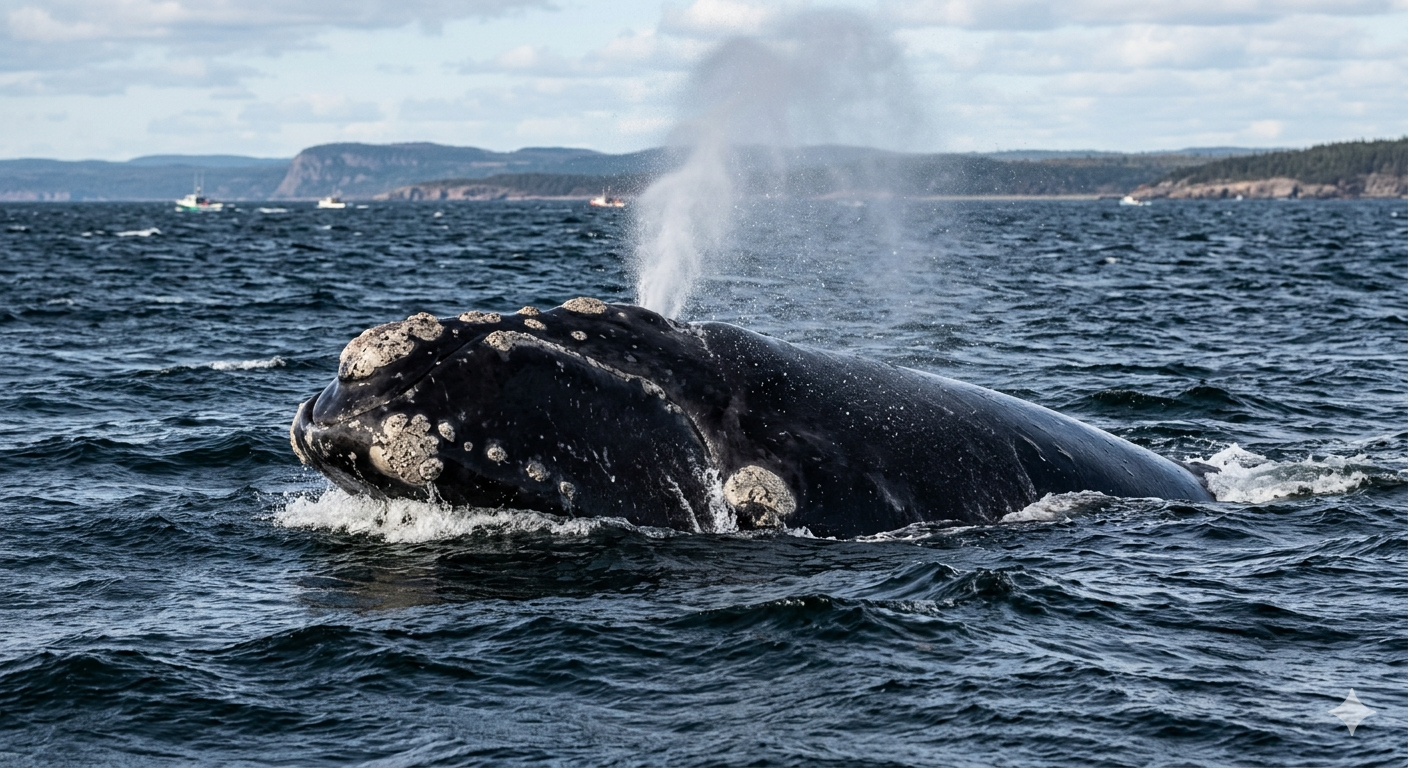
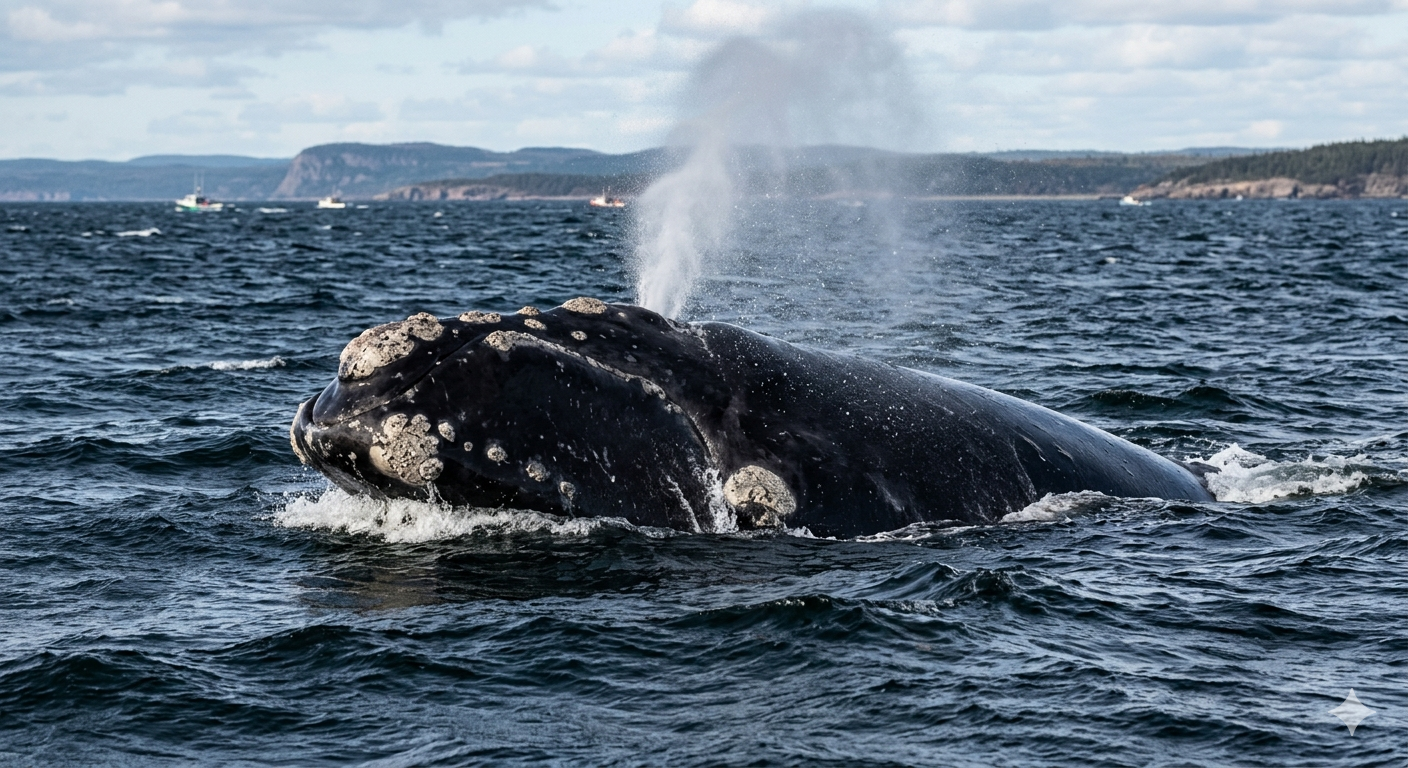
Protecting the North Atlantic Right Whales
We stand with the North Atlantic right whales—gentle giants on the brink of extinction. Through advocacy, education, and ocean stewardship, we’re helping protect their future. Every voice matters. Every ripple counts.
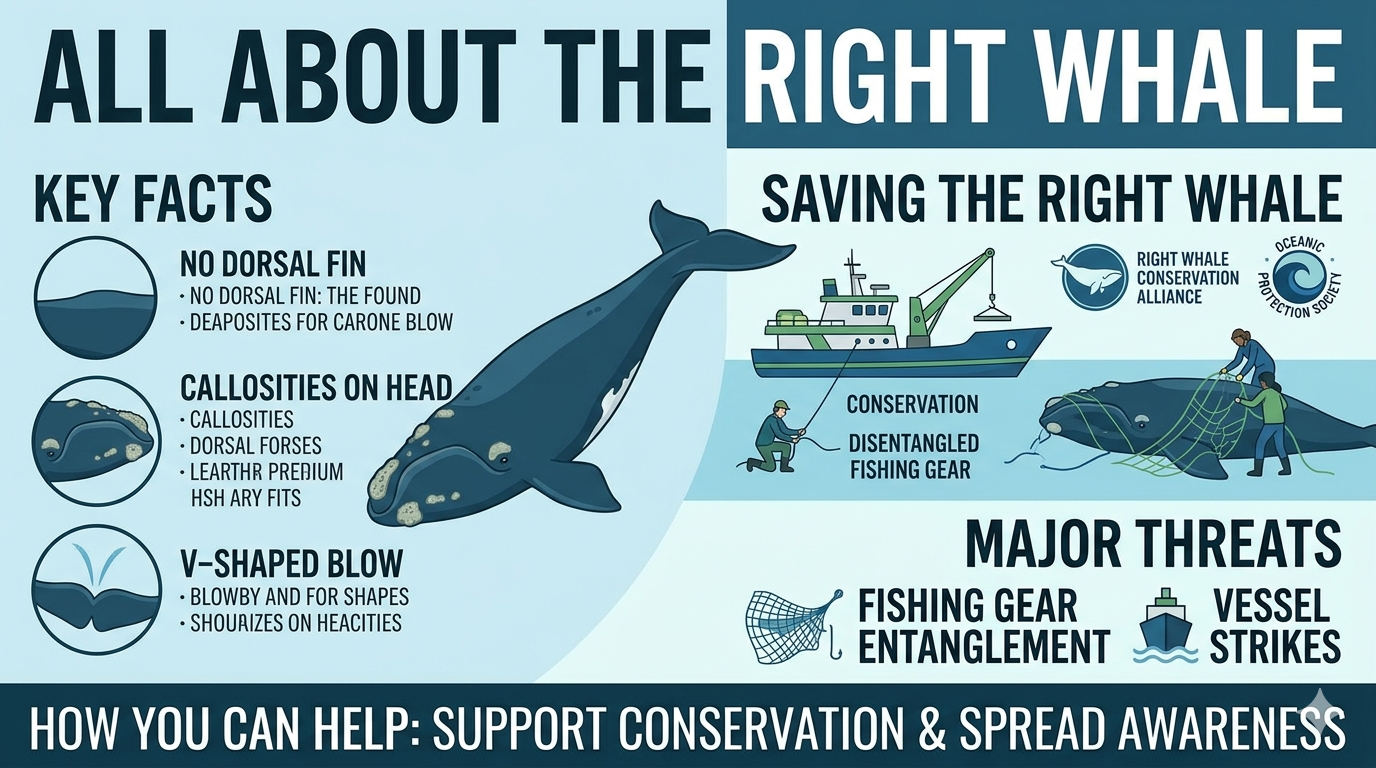
North Atlantic right whales are one of the rarest marine mammals on Earth, and their survival depends on choices humans make every single day. With fewer than 400 individuals left, every whale — every calf — matters. While the threats they face are serious, the solutions are clear, proven, and already saving lives. Our role is to help push those solutions forward.
One of the most effective protections is simple: reducing ship speeds. When vessels travel 10 knots or slower in areas where right whales are present, the risk of a fatal collision drops dramatically. Seasonal speed zones, voluntary slow zones, and real‑time alerts all help keep whales safe during migration and calving season.
Smarter Fishing Gear Reduces Entanglement
Entanglement in fishing gear is one of the leading causes of injury and death. New technologies — such as weak links, breakaway lines, and ropeless (on‑demand) gear — are helping reduce the danger. Supporting fishermen who adopt safer gear is a direct way to protect whales while keeping coastal communities strong.
Real‑Time Monitoring Makes a Difference
Acoustic buoys, aerial surveys, and citizen‑reported sightings give scientists a clearer picture of where whales are at any moment. When a whale is detected, alerts go out to mariners, triggering slow zones and route adjustments. This kind of monitoring is one of the reasons so many whales were documented this season.
Most people will never see a right whale in person — but they can still help protect them. Sharing verified sightings, supporting conservation groups, reporting injured or entangled whales, and learning how coastal activities affect marine life all contribute to the species’ survival.
Our mission is to make marine conservation accessible, factual, and human. By sharing accurate information, highlighting current sightings, and explaining the science behind the crisis, we help build the public awareness that drives policy and protection. Every article, every educational post, every piece of outreach adds another voice to the effort to save this species.
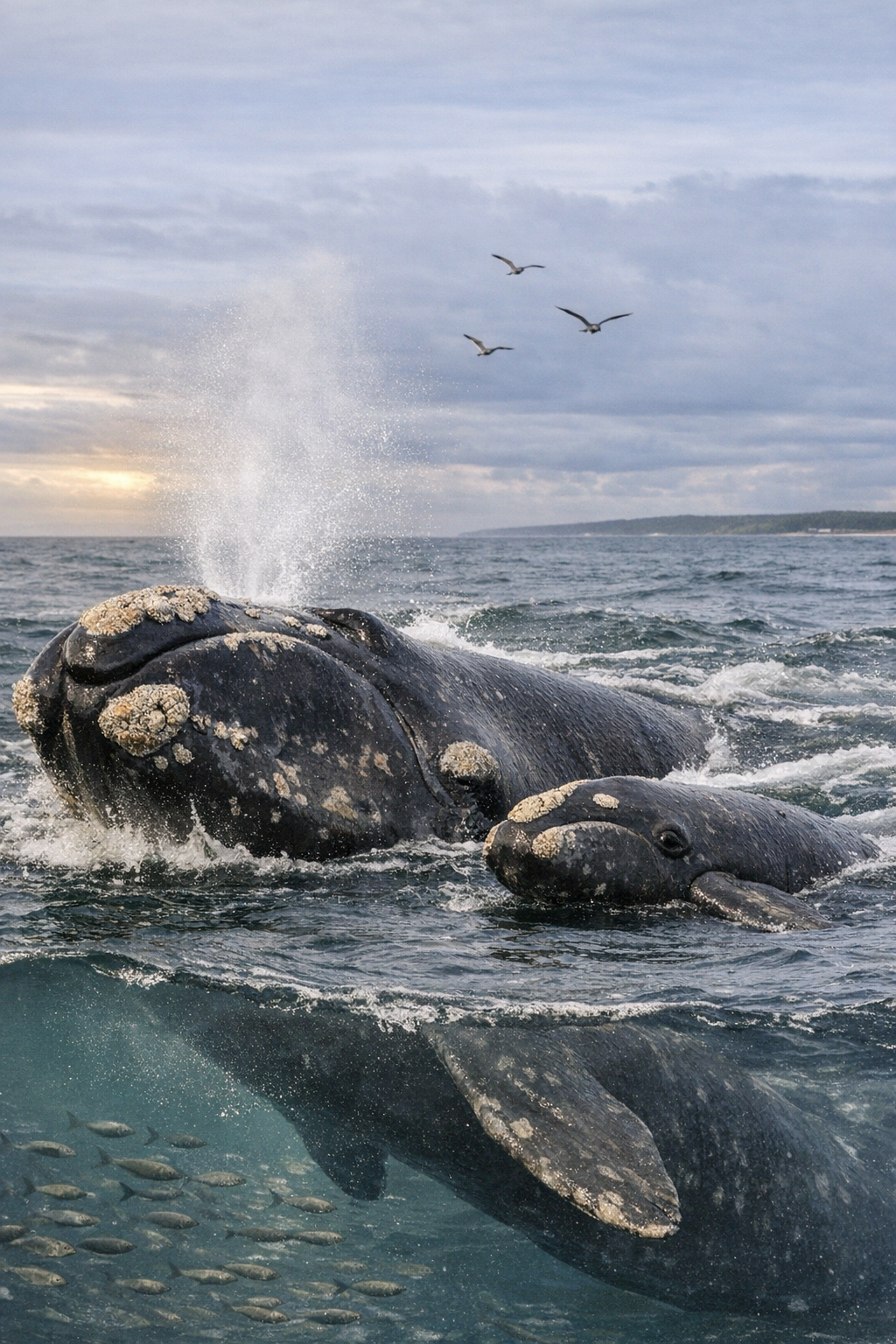
Right whales are more than a statistic. They are mothers teaching calves to navigate the coastline. They are individuals known by name, carrying scars from past entanglements. They are a living part of the ocean’s history — and its future. Protecting them protects the ecosystems that support fisheries, oxygen production, and the health of the Atlantic itself.
References:
NOAA Fisheries: Vessel speed rules, entanglement data, and monitoring programs
Florida and Gulf sightings: FOX 35 Orlando, WKMG ClickOrlando, News4JAX, WKRG, USA TODAY Network – Florida
Acoustic monitoring and migration research: NOAA Southeast Right Whale Monitoring Program
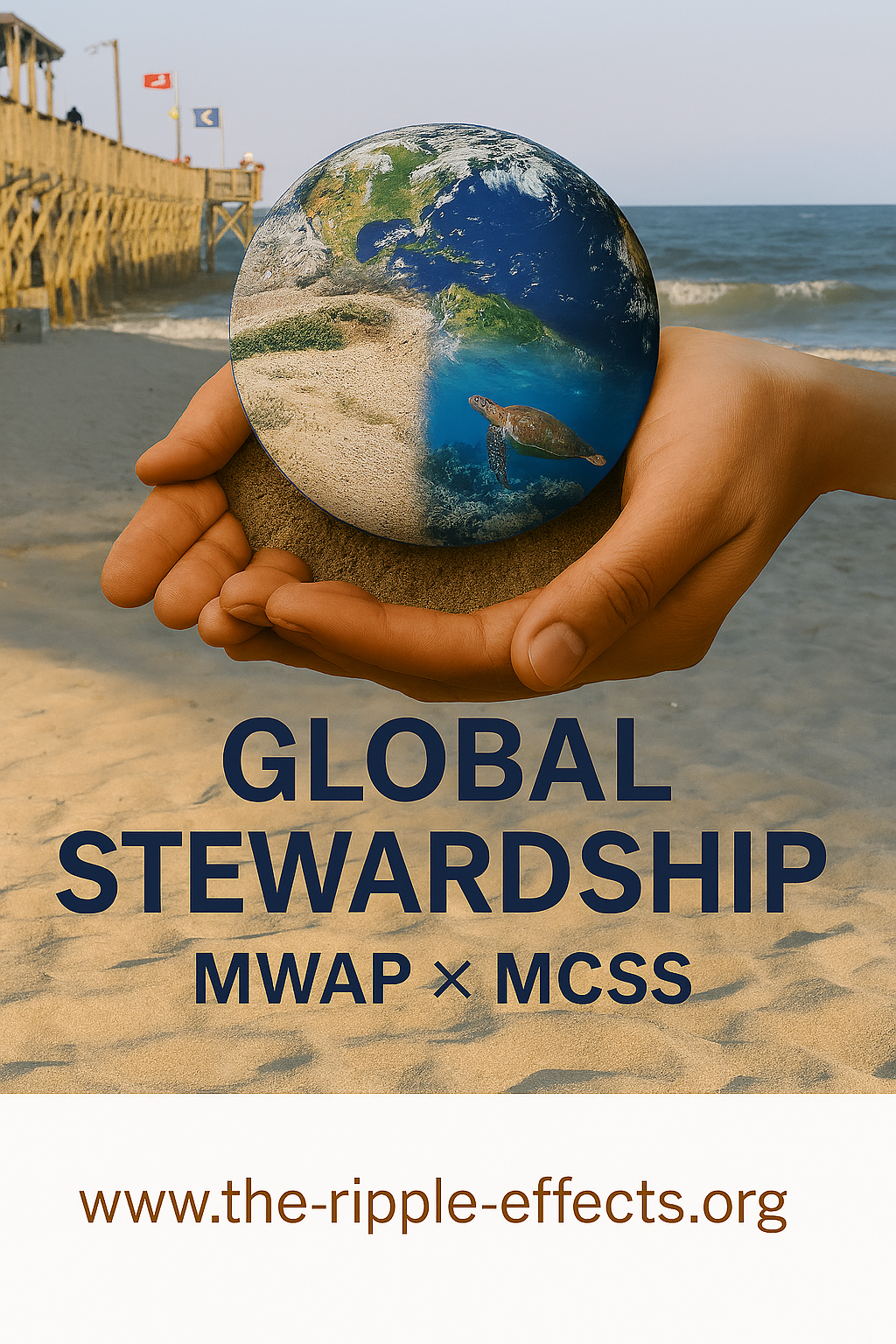
Collaboration across Borders.
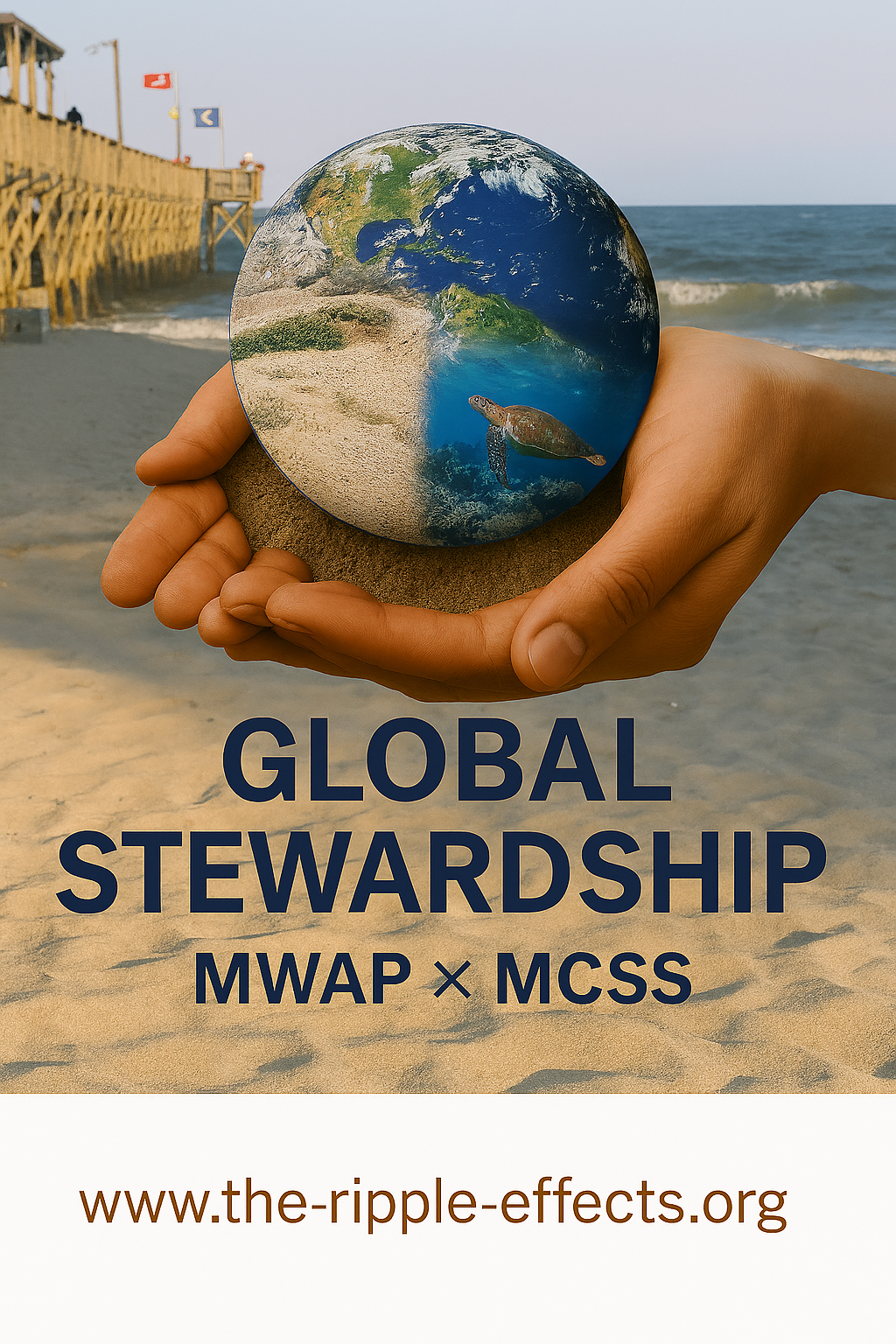
“Hands holding a globe on the shoreline symbolizing our shared responsibility to protect the world’s oceans”.
Whale sharks do not recognize political boundaries, and neither should the efforts to protect them. That truth became undeniable when researchers confirmed that a juvenile male whale shark—nicknamed Mistral—traveled more than 1,200 kilometers from Nosy Be, Madagascar to Mahé in the Seychelles. His journey was not discovered through expensive satellite tags, but through something far more powerful: collaboration.
Two organizations, the Madagascar Whale Shark Project (MWSP) and the Marine Conservation Society Seychelles (MCSS), independently photographed Mistral years apart. When they compared their photo‑ID databases, the match was unmistakable. The same constellation of white spots appeared in both images, proving that whale sharks are regional travelers whose survival depends on cooperation between nations.
This partnership highlights the kind of impact we champion at The Ripple Effects Marine Ecosystem Conservation. By supporting groups that share data, resources, and scientific insight, we help strengthen conservation across entire ocean corridors—not just within a single country’s borders.
Their collaboration addresses three urgent challenges:
1. Legal Gaps
Whale sharks are protected in Seychelles but lack formal national protection in Madagascar. Shared research puts pressure on regional governments to create connected “blue corridors” that safeguard migration routes.
2. The “Vanishing” Act
Sightings have declined in Madagascar while increasing in Seychelles. Without collaboration, researchers might assume the population is collapsing when, in reality, the sharks are simply moving across borders.
3. Limited Funding
By pooling data and relying on photo‑ID instead of costly satellite tags, these two small nonprofits can track movements across 1,200 kilometers of open ocean—something neither could achieve alone.
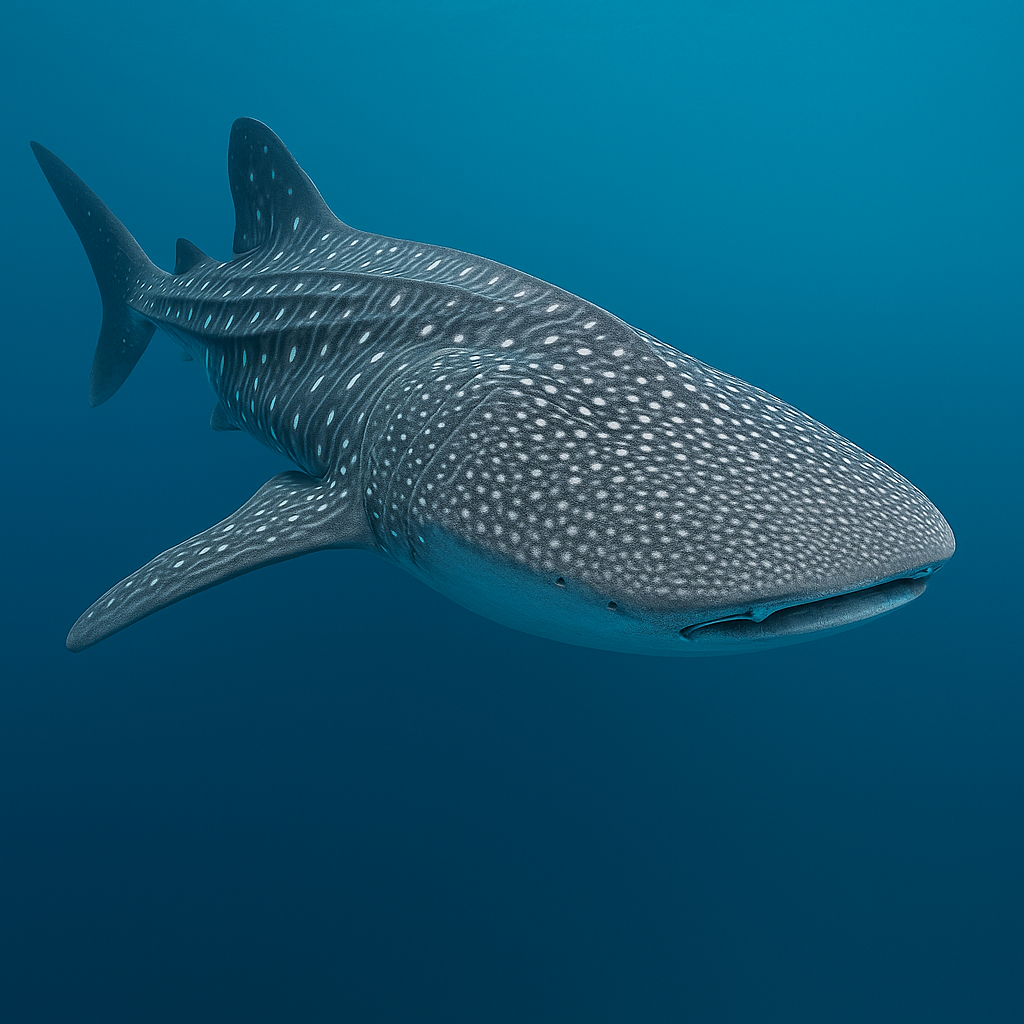
Whale shark swimming in the open ocean
References and Further Readings:
Marine Conservation Society Seychelles. (2026). Welcome to MCSS. https://www.mcss.sc
Marine Conservation Society Seychelles. (2026). Regional Coral Project. https://www.mcss.sc/projects/regional-coral-project (mcss.sc in Bing)
Marine Conservation Society Seychelles. (2026). Projects. https://www.mcss.sc/projects
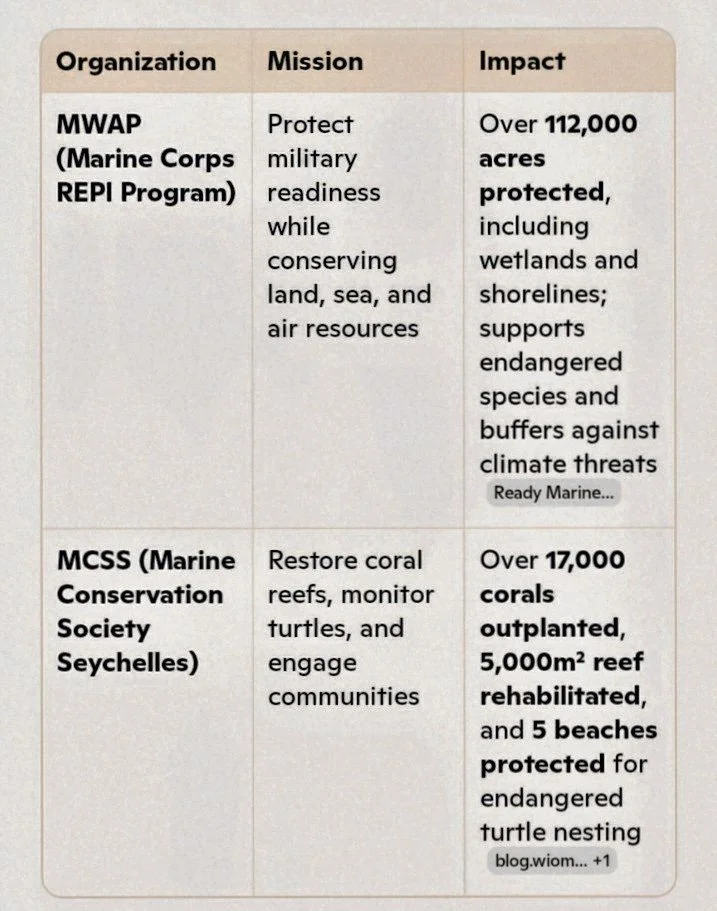
Ready Marine Corps. (2024, April 29). Preserve, Protect, and Defend the Mission: Marine Corps REPI Program Advances Marine Corps Community Partnership and Mission Protection. https://www.ready.marines.mil/News/Article-Display/Article/3387654 (ready.marines.mil in Bing)
U.S. Department of Defense. (2024). Readiness and Environmental Protection Integration (REPI) Program Overview. https://www.repi.mil
U.S. Department of Defense. (2025). REPI Report to Congress. https://www.repi.mil/Resources/Reports-and-Fact-Sheets (repi.mil in Bing)
The “Plastic Vacuum”: Dutch Innovations is Cleaning Our Water.
Explore trusted sources on the Dutch ocean cleanup vacuum system-from official technology pages to research studies and environmental impact reports.
We often hear about the millions of tons of plastic entering our oceans every year, but we rarely hear about the high-tech “vacuums” working to suck it back out. From the historic canals of Amsterdam to the middle of the Pacific Ocean, Dutch engineers are providing that we can use physics, air, and massive scale to reverse the damage.
How it Works:
It’s a deceptively simple design. A perforated tube is laid diagonally across the bottom of a river. When compressed air is pumped through it, a “curtain” of bubbles rises to the surface.
The Lift: This upward current blocks plastic from flowing downstream and lifts it from the riverbed to the surface.
The Push: Because the barrier is at an angle, the natural river current pushes the waste into a collection system on the side.
Why it’s a game changer: It doesn’t just catch surface trash; it catches plastic through the entire depth of water. Best of all? Fish can swim right through the bubbles unharmed.
The Giant Sweep of the Great Pacific
For the plastic that has already escaped into the open sea, the team at The Ocean Cleanup developed a massive “vacuum” know as System 03.
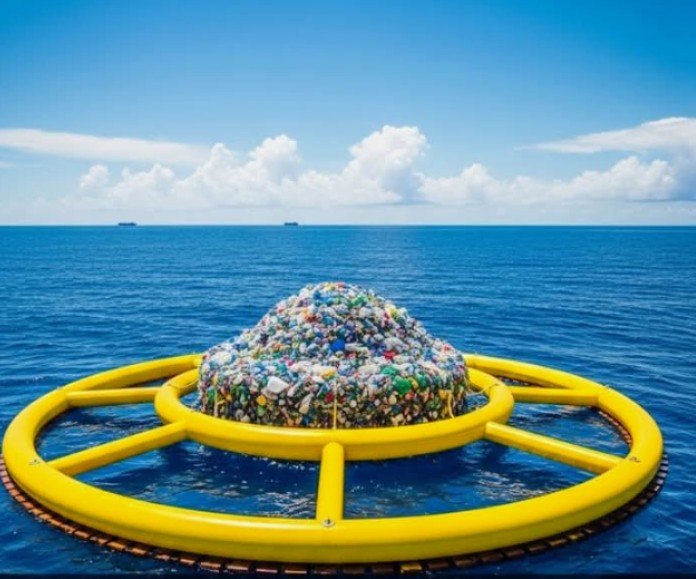
Located in the “Great Pacific Garbage Patch” (an area of trash twice the size of Texas), System 03 is a floating, U-shaped barrier nearly 1.4 miles long.
The Process:
1. The Funnel: Two ships pull the barrier at a very slow pace, funneling plastic into a massive collection zone at the back.
2. The Retention: Once the “bag” is full, it is hauled onto a ship.
3. The Lifecycle: The plastic is taken back to land, sorted, and recycled into durable products, ensuring it never returns to the water.
Why This Matters for Us
Education is the first step toward a cleaner planet. These systems aren’t just cool gadgets: they are proof that human ingenuity can match the scale of the problems we’ve created. By catching 86% of plastic in rivers and aiming to remove 90% of floating ocean plastic by 2040, these “plastic vacuums” are giving our marine life a second chance.
What We Can Do:
While the Dutch are cleaning the water, we can help by stopping the “leak” at home by reducing single-use plastics, participating in local river cleanups, and just spreading the word about technologies like the Bubble Barrier.
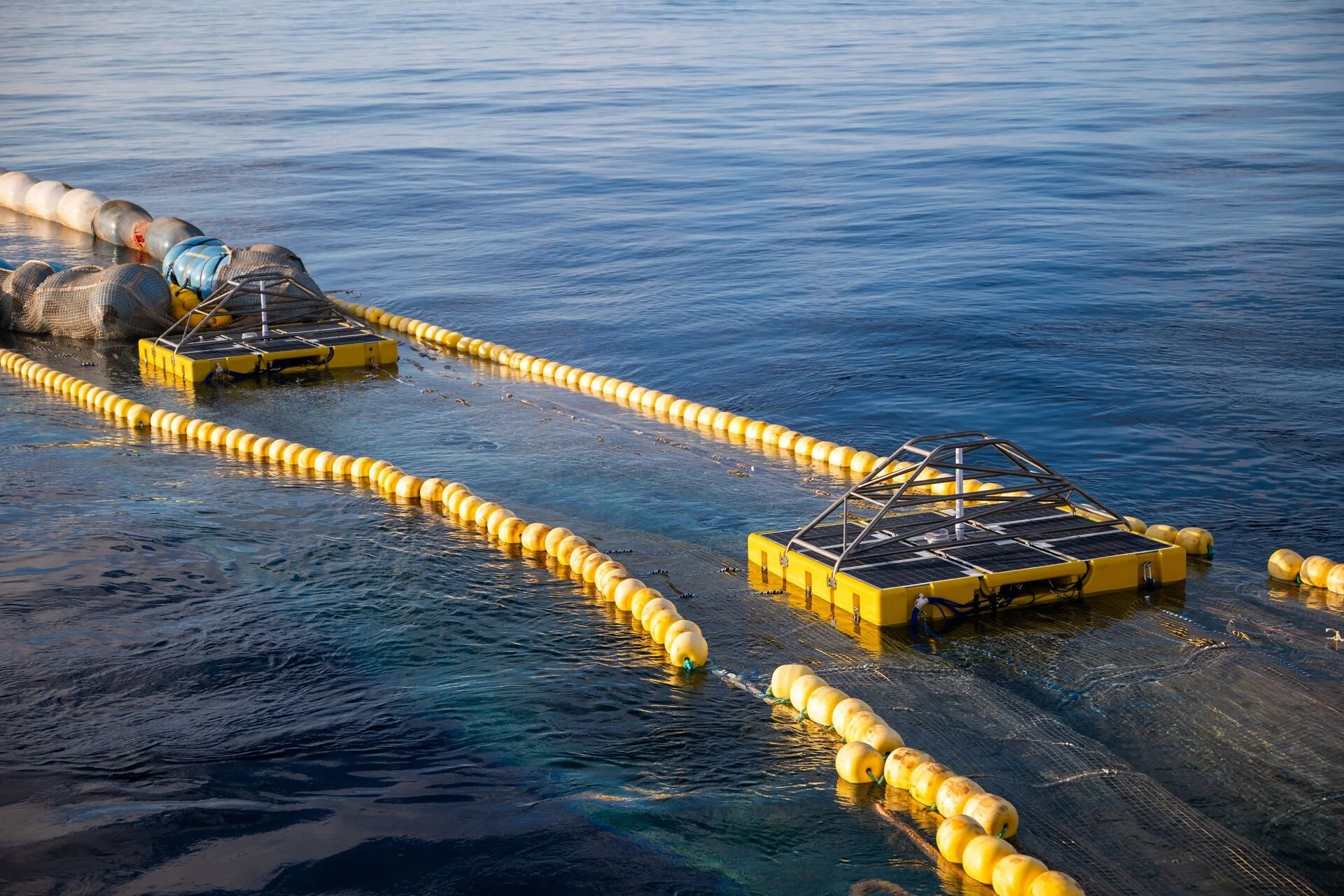
Floating buoy guiding ocean plastic into the Dutch cleanup system’s collection channel.
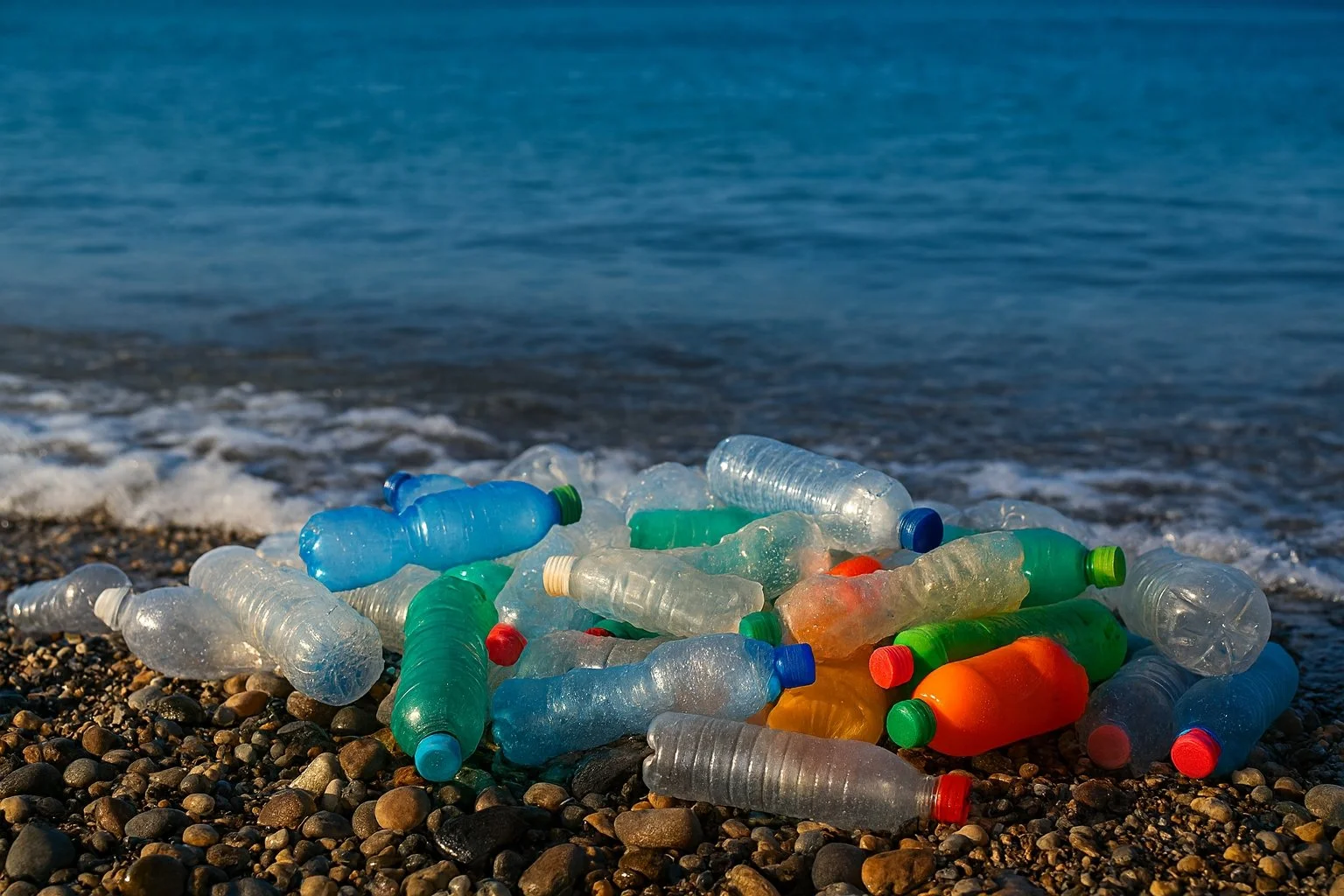
Plastic debris drifting onto the shoreline.
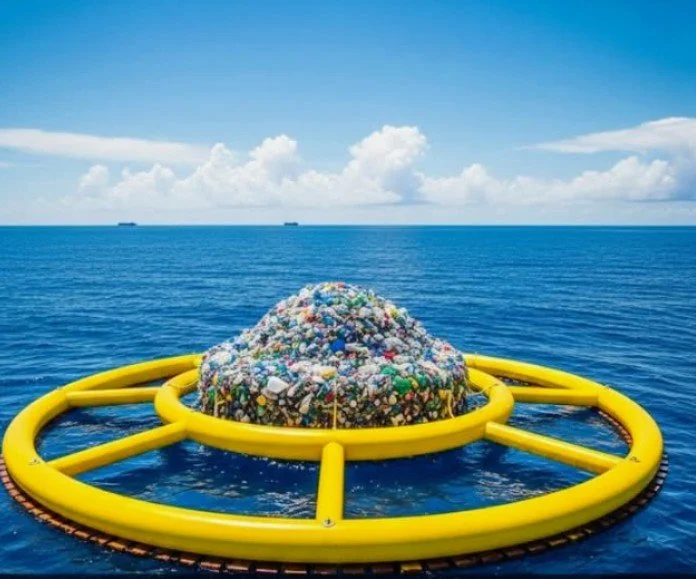
Circular vacuum device floating on the ocean with plastic pieces collected inside.
Dutch vacuum cleanup reference, not real the vacuum.
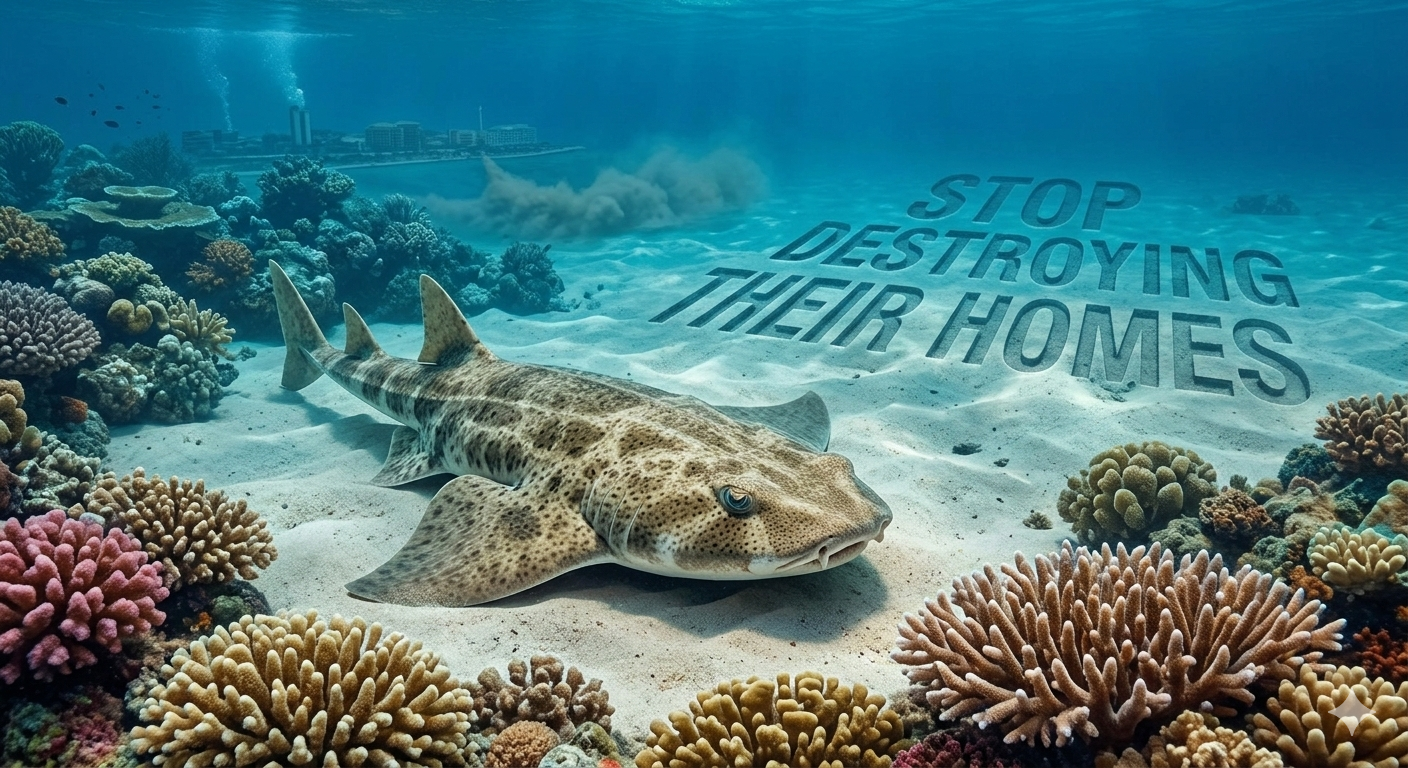
The Angel Shark Project: Protecting the sand dwelling Sharks
A master of camouflage in a crumbling sanctuary. The Angel Shark relies on the seafloor for every stage of it life, from resting to raising the next generation. But as their habitat disappears under the weight of human activity, their invisibility becomes their greatest vulnerability. We must protect the ground they stand on.
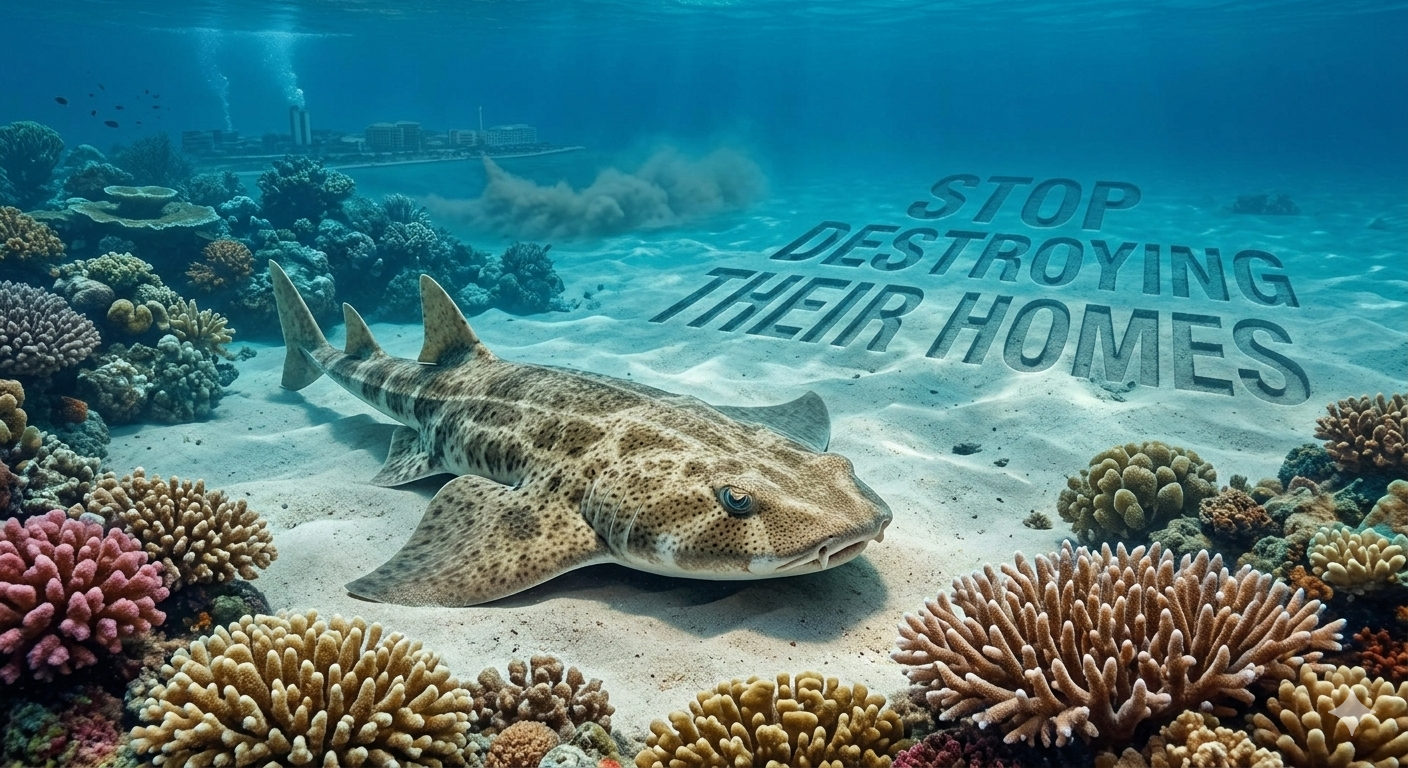
Angel Shark
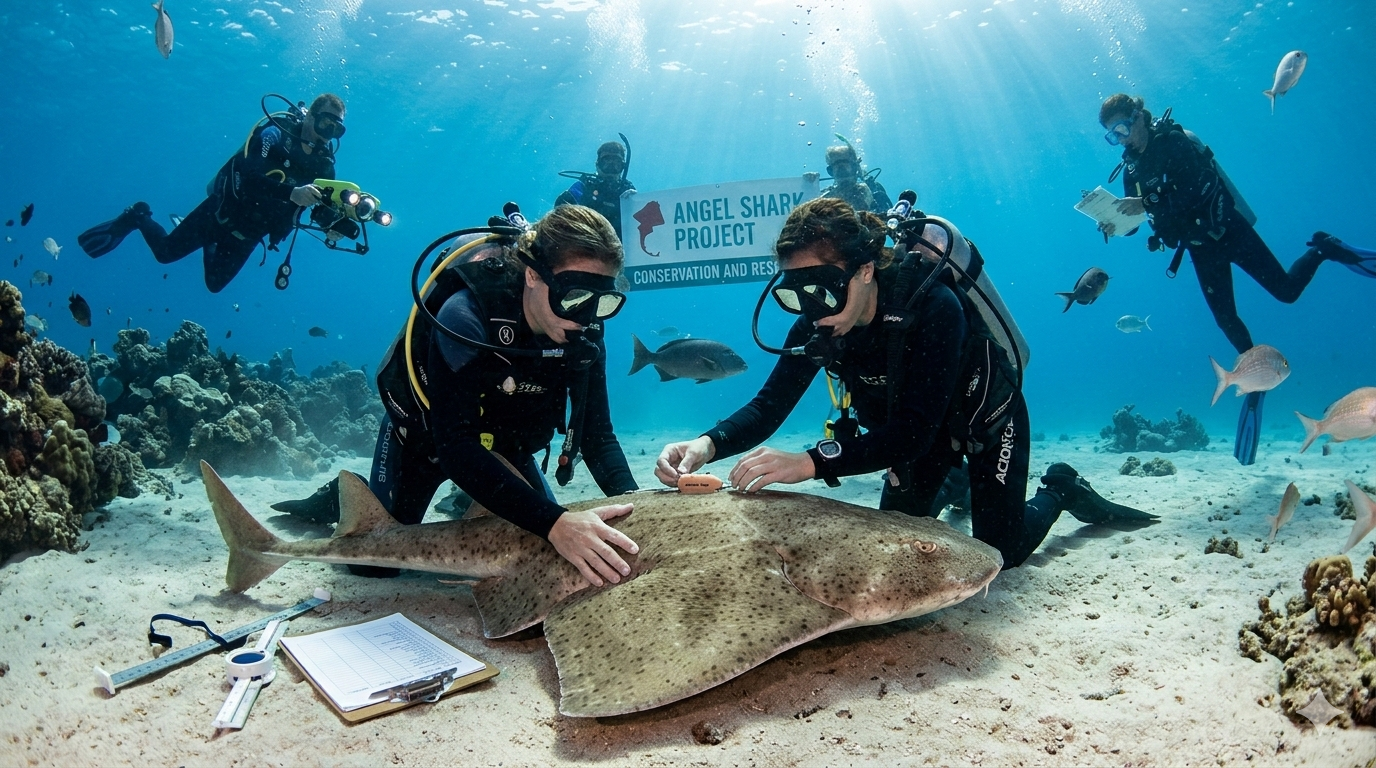
Divers measuring an angel shark
To learn more or get involved please check their sites:
The angel shark is one of the most endangered sharks in the world, and its survival depends on something most people never think about: clean, undisturbed sand. Angel sharks are the masters of the hidden ecosystem that exists just beneath the seafloor. They don’t swim in the open blue, they live within the sand. They rely on it for everything: hunting, resting, and raising their young. But their survival depends on something most of us never think about: clean, undisturbed sand.
When dredgers tear up the seafloor for coastal development or the construction of artificial islands, the sand loses its structure. It becomes a suffocating cloud that drifts for miles, burying the creatures that lived between the grains and dark water. For the Angel shark it’s the destruction of their nursery. When the sand becomes unstable or disappears, so do they.
The Angel Shark Project
This week as we dive into the global value of sand, we are highlighting the work of the Angel Shark Project in the Canary Islands. They are one of the few groups on Earth brave enough to focus on a single overlooked species to save an entire ecosystem. Their mission is simple but powerful: Protect the sand, protect the shark.
What they do:
They map the nurseries identifying the exact sandy bays where baby angel sharks are born so we can demand they stay dredge free. Monitoring the clouds documenting how sediment levels from nearby construction projects are affecting shark health. They work with the community, partnering with local fishers to reduce accidental captures and ensure these ghosts of the seafloor can roam safely.
We often think of the ocean as a powerful, indestructible force. But it is delicate. It remembers every grain of sand we take. By protecting the angel shark, we aren’t just saving one fish, we are protecting the very foundation of the ocean floor.
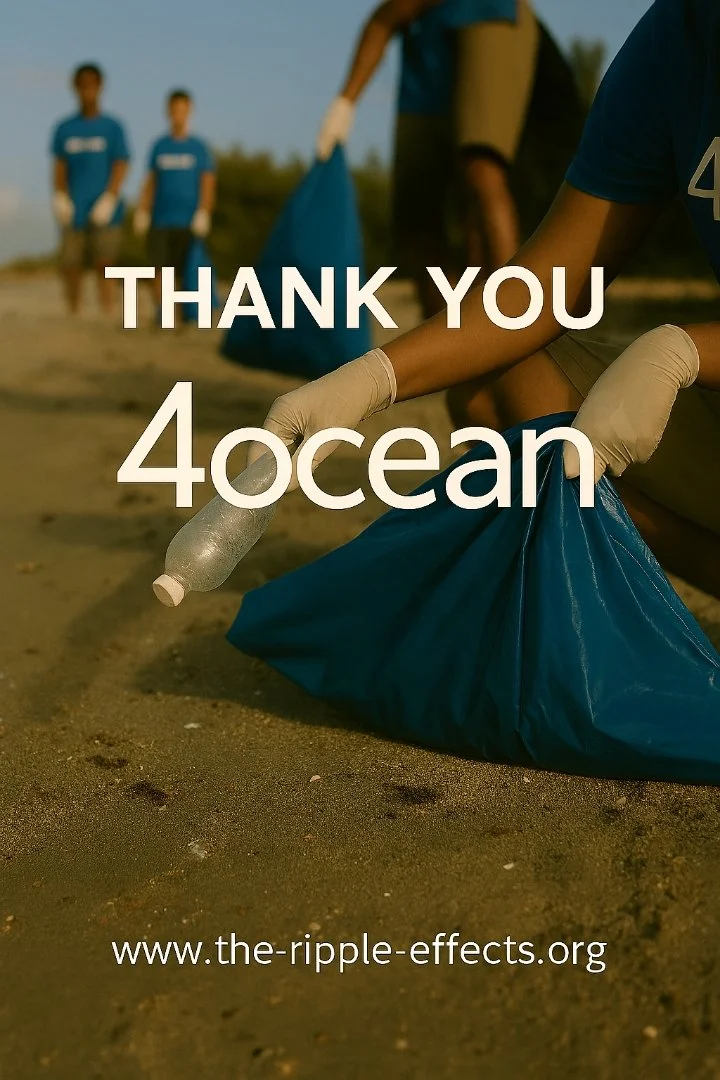
4Ocean: Thank You
Ocean cleanup can feel overwhelming. But 4Ocean shows us what steady, human scale impact looks like, one pound at a time. Their crews don’t wait for perfect conditions. They just show up, haul out the plastic, and remind us that every small action matters.
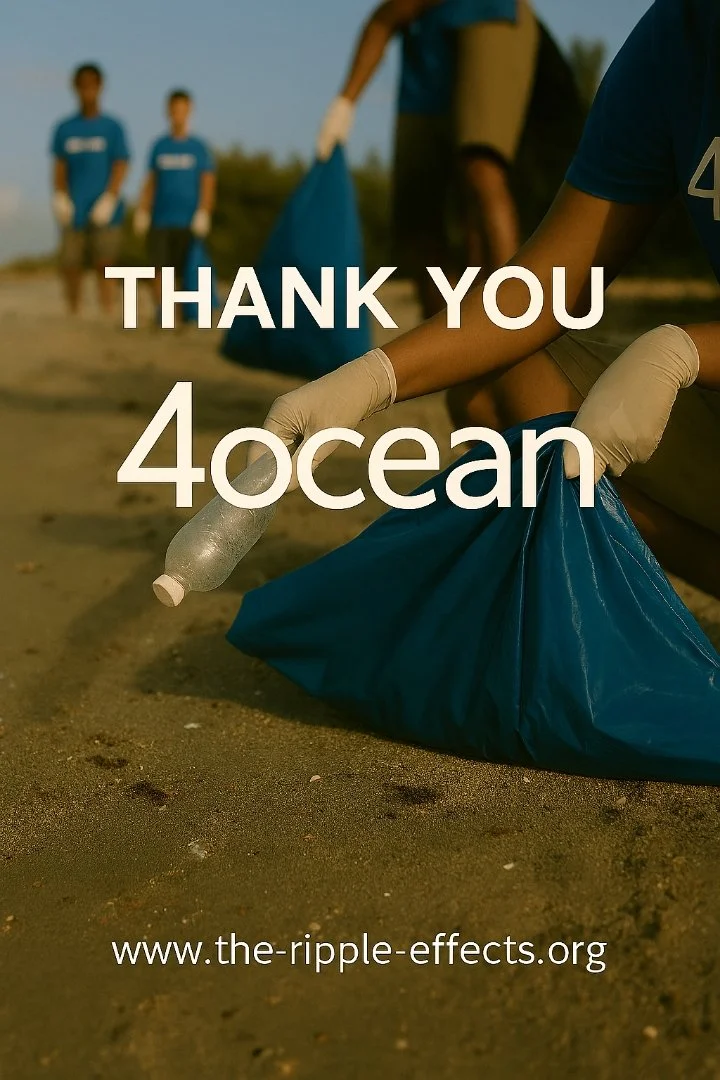
Whatever it is, the way you tell your story online can make all the difference.
Ocean conservation can sometimes feel overwhelming, especially if you are mission driven and expect results quickly. But then you see a crew like 4Ocean real people out there everyday pulling trash from the water one pound at a time, and suddenly it feels possible. And honestly that deserves a moment of gratitude.
What makes 4Ocean special
They don’t wait for perfect conditions or grand speeches. They just show up and get to work. Full-time captains and crews head out on boats, walk the beaches, clean rivers, and haul out the plastic most of us never even seen. In 2025 they removed, give or take, 350,000 pounds of plastic and other trash from oceans, rivers, and coastlines worldwide through their cleanup operations and partnerships. Every bracelet someone buys funds one pound of trash removed.
Their work matters. Plastic pollution is one of the biggest threats to marine life. Sea turtles, dolphins, whales, seabirds they all pay the price for our waste. 4Ocean reminds us that cleanup isn’t hopeless. It’s happening every day, in real places, by real people. Every pound pulled from the ocean is one less threat to the creatures we’re fighting for. Since their founding in 2017, 4Ocean has pulled over 42 million pounds of debris globally. A staggering number that shows how consistent, human scale efforts can make a difference.
Anyone can Join
You don’t need to be a scientist or live near the coast to make a difference. You can:
-Support cleanups by purchasing a bracelet -Join a local cleanup event -Reduce single use plastic -Share 4Oceans mission
The Ripple Effects is about showing how individual choices ripple outward into real change. 4Ocean is proof that when people care enough to act the ocean responds. Their work is steady, honest, and deeply needed. And today they deserve a moment of appreciation.
“ To the crews out there hauling hope hope from the waves-Thank you you show the ocean true love and give the pubic hope.”
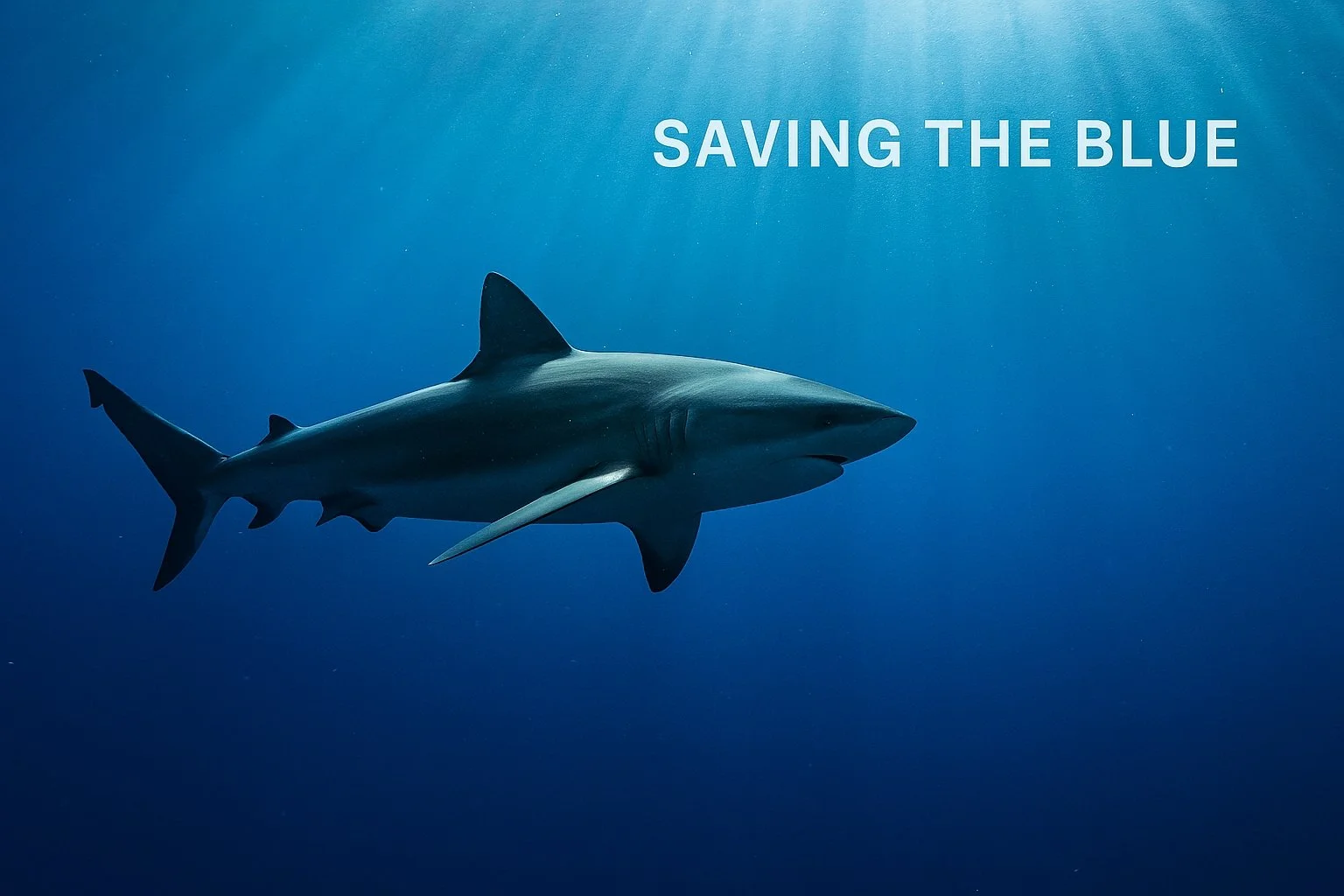
Saving the Blue: Restoring Our Oceans
Discover how Saving the Blue is leading shark conservation and ocean restoration through research, education, and global collaboration. Saving the Blue works to restore ocean ecosystems and protect marine life.
During Shark Week in 2024, I noticed marine biologist Tristan Guttridge wearing a shirt with the words Saving the Blue. So I got a little curious and did a quick search which led me to the organization dedicated to protecting sharks and restoring the ocean ecosystems. Since then, I’ve followed their work closely, supporting their mission and even wearing their shirts as a reminder of the fight to save our oceans and with hope of spreading their mission. Saving the Blue isn’t just a name- it’s a movement that combines science, education, and community action to ensure that sharks and marine life have a future.
From the start, Saving the Blue has focused on protecting sharks and restoring the ecosystems they depend on. Their team works directly in the field, tagging and monitoring vulnerable species to better understand their movements and the threats they face. This research not only advances science but also strengthens conservation strategies worldwide. Beyond science, they are deeply committed to education and outreach. By engaging communities and inspiring younger generations, Saving the Blue helps people see sharks not as villains, but as vital guardians of ocean health. They offer programs that can turn your curiosity into action. Supporters can adopt a shark and receive updates on its movements, tracking its migration and learn how human activities affect its journey. For those eager to dive deeper, the organization invites the public to join shark tagging missions alongside scientists, contributing directly to research and conservation. These hands-on experiences, along with the community outreach and education, make Saving the Blue not just a movement but a way for anyone to help restore our oceans. Their programs emphasize that saving sharks means saving the balance of the entire marine ecosystem.
Through global collaboration with scientists and conservationists, they amplify their reach, ensuring that efforts to protect marine life extend far beyond local waters. Every project they lead ripples outward, helping the ocean thrive and reminding us that protecting sharks is inseparable from protecting our planet’s future. The work of Saving the Blue reminds us that protecting sharks is about more than saving a single species- it’s about safeguarding the balance of our oceans and the future of our planet. Their dedication to research, restoration, and education shows what’s possible when science and community come together for conservation.
At The Ripple Effects, we believe that every story of resilience and restoration creates waves of change. By supporting organizations like Saving the Blue, we can ensure that the ocean’s guardians continue to thrive and inspire generations to come.
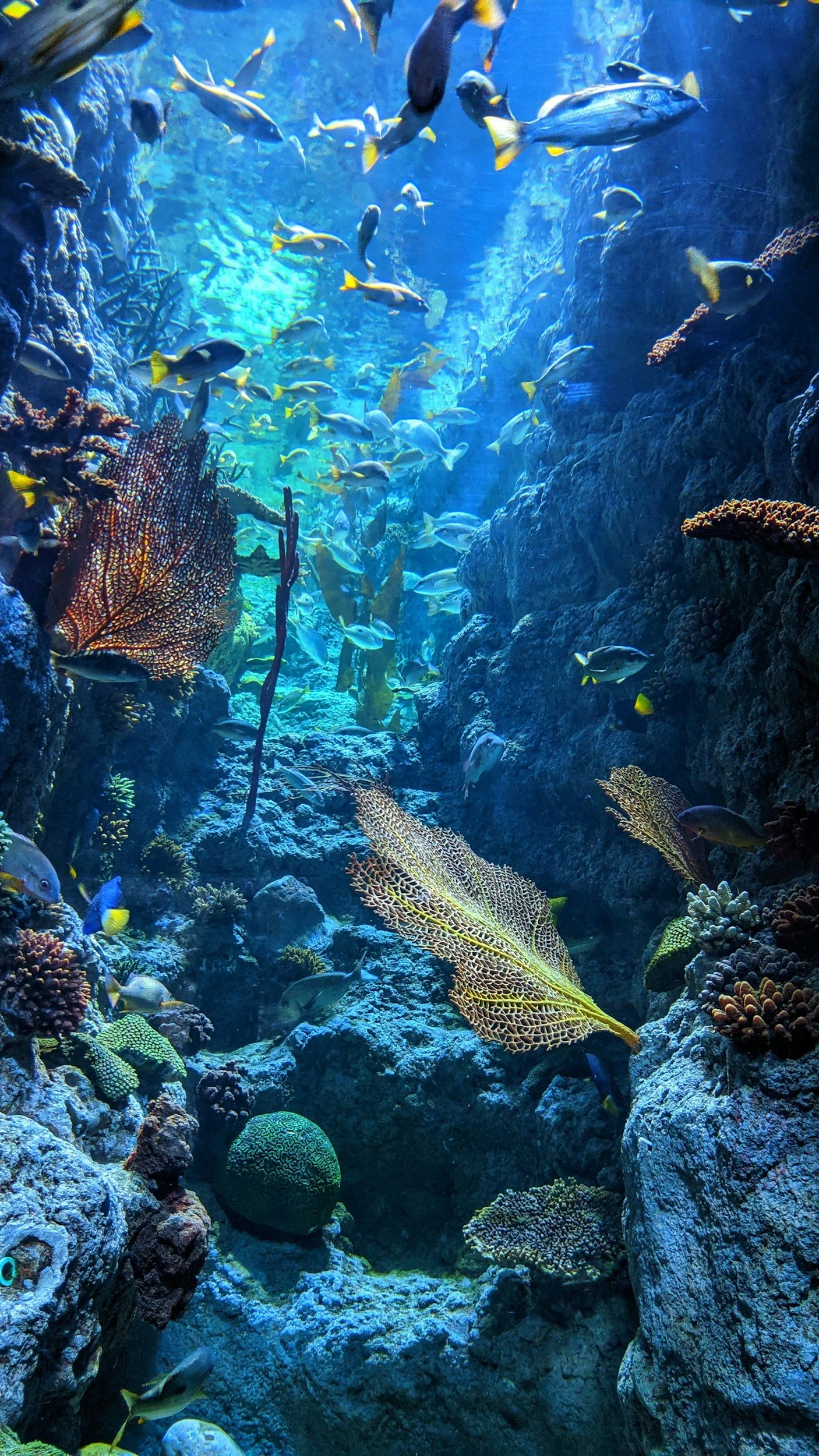
Canon’s Coral Campaign
Canon 3D coral printing
Coral Reefs are like underwater cities. They’re colorful, bustling, and full of life-home to fish, turtles, and countless other creatures. They protect coastlines from storms and provide food for millions of people. But these cities are in trouble. Rising ocean temperatures and pollution are causing corals to fade and die, leaving behind ghostly skeletons where vibrant life once thrived.
Canon’ Big Idea, the company best known for cameras, wanted to help people connect with coral reefs in a new way. Instead of just showing photos, Canon used its imaging technology to create 3D coral replicas that people can actually touch, meticulously scanning real reef structures to capture fine surface textures and intricate branching patterns, then producing durable, lifelike models through high-resolution 3D printing and color-matching processes; these replicas recreate the tactile experience of coral — from the roughness of encrusted algae to the delicate ridges of polyps — and serve as educational tools in museums, outreach programs, and accessible exhibits for visually impaired visitors, while also providing researchers with physical reference samples for study without disturbing fragile reef habitats. When you can feel the texture of coral in your hands, the ocean’s fragility becomes personal, it turns distant problems into something we can all connect with- and hopefully act on.
Where it’s happening- South Africa exhibits and events let people experience coral textures and learn why reefs matter, even far from the sea. Canon teamed up with local conservation groups, one is Seychelles, to build a coral breeding facility — here’s more information about Seychelles and the context of this project.
Seychelles is an archipelago of 115 islands in the western Indian Ocean, about 1,600 km east of mainland Africa. The main population centers are on the granitic inner islands (Mahé, Praslin, La Digue) while many outer islands are low-lying coralline.
Seychelles’ reefs, seagrass beds, mangroves and offshore banks support high marine biodiversity, including endemic species. Coral reefs are crucial for fisheries, coastal protection, tourism and cultural identity. Climate change (rising sea temperatures and coral bleaching), ocean acidification, overfishing, coastal development, storm damage and invasive species all threaten Seychelles’ marine ecosystems.The Seychelles government, local NGOs, and international partners engage in marine conservation via protected areas (including marine protected areas and community-managed zones), fisheries management reforms, and restoration initiatives. Seychelles is also active in blue economy planning and debt-for-nature swaps.
Recurrent mass bleaching events have caused widespread coral decline. Restoration through coral nurseries and breeding can help recover degraded reefs, support biodiversity and restore ecosystem services. Seychelles has several local conservation organizations and research institutions involved in reef monitoring and restoration, often working with international partners. These groups combine traditional ecological knowledge with scientific techniques and community involvement.
Canon is also working with United Arab Emirates through Project REEFrame, Nature Seychelles, and the Coral Spawing Lab(UK), who bring the science and local knowledge to make reef restoration possible.
No- the 3D coral replicas are not being placed in the ocean, as far as I have searched. They are designed for public exhibits and educational experiences on land, so people can see and feel what coral reefs are like without needing to dive underwater. The replicas are a way to build empathy and awareness, not a restoration tool. For actual reef restoration, Canon’s campaign supports scientific coral breeding facilities (like the one in Seychelles) where real corals are grown and later transplanted into the ocean to help reefs recover. The replicas are about education and connection, while the live coral breeding is about restoration and resilience.
The Coral Campaign isn't just about coral. It’s about us. It’s about realizing that protecting nature starts with understanding it. When we connect emotionally- whether through sight, touch, or story-we’re more likely to protect what we love. Canon’s Coral Campaign is a reminder that even if we live far from the ocean, we’re all connected to it.
Let’s Connect with Ocean Connections
It all begins with an idea.
I wanted to give some acknowledgment and appreciation to the marine conservation group Ocean Connections in helping communities to get involved with the ocean world. Offering education, advocacy, and care for marine life. From their home base in Milwaukee to outreach in South Carolina, they show how the ocean sustains both ecosystems and people.
Ocean Connections in Myrtle Beach brings their mission to life through immersive programs, like teaming up with the Pirates Voyage Dinner & Show for things like beach clean-ups, and animal ambassador appearances at the dinner shows, public and private seal and sea lion shows, and educational programs for schools and groups.
Interactive animal encounters this educational experience is where you can meet, feed, and train sealions. Sounds like an amazing experience for anyone interested in being around marine life in a calm setting. They also take part in School and Zoo field trips with interactive activities and demonstrations. They also have Volunteer Opportunities where they offer programs for volunteers to learn about animal care, training, and conservation.
What they offer the Ocean
Forever homes for rescued seals and sea lions.
Daily care, nutrition, and enrichment to ensure animal welfare.
Advocacy for conservation awareness and sustainable practices.
What they offer the Community
Inspiring experiences that connect families and visitors to marine life.
Education that turns curiosity into conservation action.
A reminder that Myrtle Beach is not just a tourist destination, but a living classroom for ocean connection.
Ocean Connections shows us that the ocean’s story is our story. In Myrtle Beach, every encounter-whether with a sea lion, a soaring macaw, or the waves themselves-is a chance to connect. Let’s carry that connection forward, protecting the ocean and strengthening the communities that depend on it.
To explore their programs, learn more about their mission, or plan your own visit, head to: oceanconnections.org
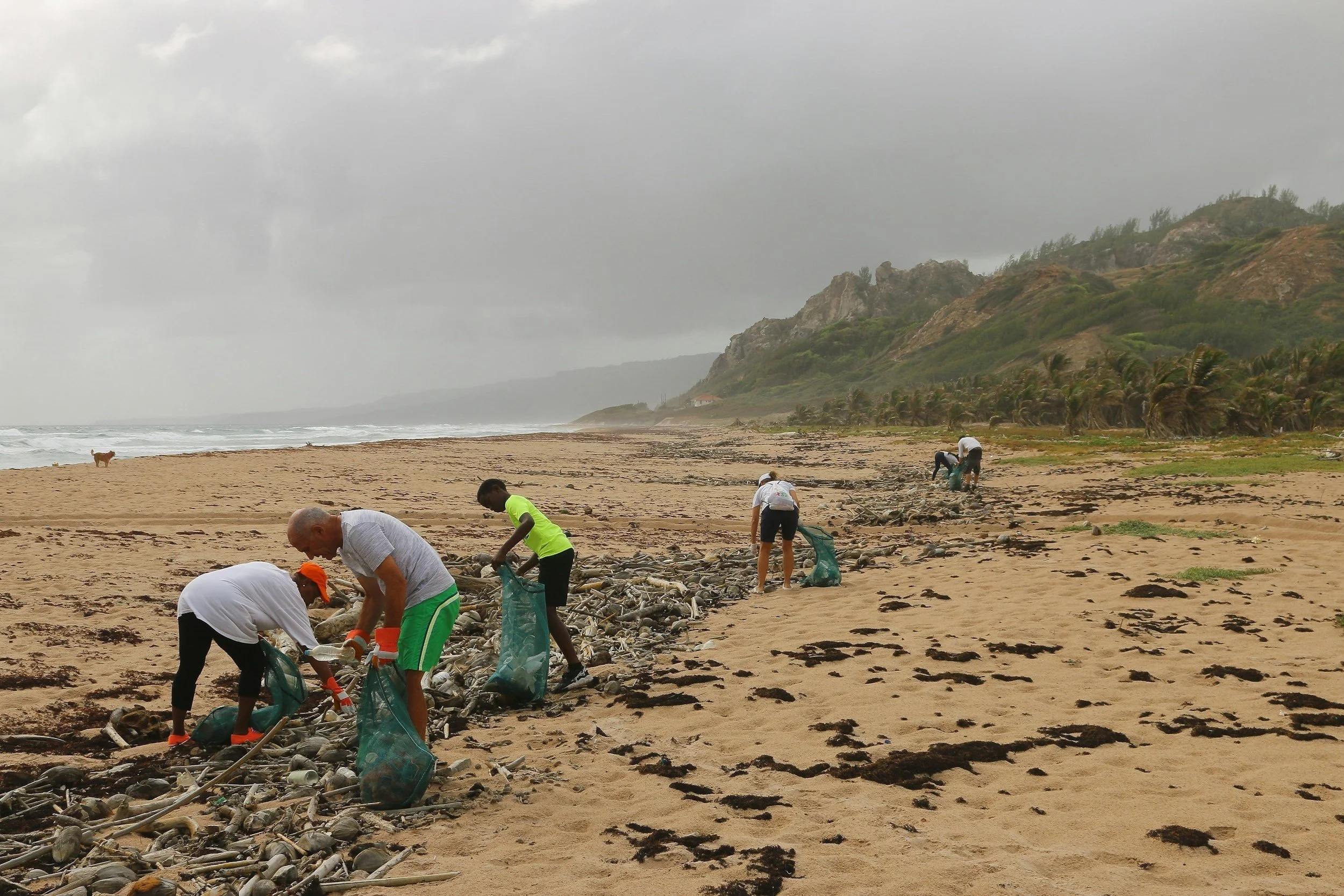
Plastic-Free Coastlines: Local Action, Global Impact
Communities from Cambodia to Florida are proving that local action can spark global change. By collecting plastics, restoring coastlines, and inspiring youth leadership, these plastic-free initiatives are cleaning beaches, protecting marine life, and shaping policies worldwide. Together, they show how protecting our oceans creates ripples of hope far beyond the shoreline.
Plastic pollution is one of the greatest threats to our oceans, but communities across the world are showing that small actions can create powerful ripple effects. From Southeast Asia to Florida to coastlines worldwide, local initiatives are turning the tide against plastic waste.
In Cambodia and Vietnam, families working with the nonprofit TONTOTON collect all types if plastic waste-even the low-value pieces that usually escape recycling. Instead of ending up in the ocean, this plastic is transformed into durable boards for furniture, classrooms, and community projects.
In the Florida Keys and South Florida, Coastlove organizes cleanups, dune restoration, and youth-led education programs. Their “Young Changemakers” initiative empowers students to lead plastic reduction projects, plant native vegetation, and restore coastal habitats.
Through the International Coastal Cleanup, volunteers in more than 150 countries have removed millions of pounds of trash from beaches and waterways. The data they collect is shaping global policies to reduce single-use plastics.
Plastic pollution harms marine life, damages ecosystems, and impacts the health and livelihoods of coastal communities. By removing plastics at the source and finding creative alternatives, these programs protect biodiversity, strengthen local economies, and inspire global change.
These plastic-free coastline stories show resilience and restoration in action. Families are turning waste into opportunity, students are leading the way in protecting their beaches, and volunteers across the globe are proving that local action can spark global change. Together, they remind us that protecting our oceans creates ripples of hope far beyond the shoreline.