
DIVE INTO OCEAN STORIES
Newsletters, Community centered programs, Fun Updated Information and Stories about Our Ocean and Marine Ecosystem
A Fresh take on Ocean Life ~
Thank you for viewing my page, at the top you may explore other sections with information( by clicking the top left corner on phone views). Below I have assignments, and research I have done from school. As I work toward my degree in Marine Biology I would love to share and document my journey with you. Please feel free to contact me with any guidance or feedback. I welcome connection and conversation as I continue learning and growing in marine conservation. A.Hillary Suddath
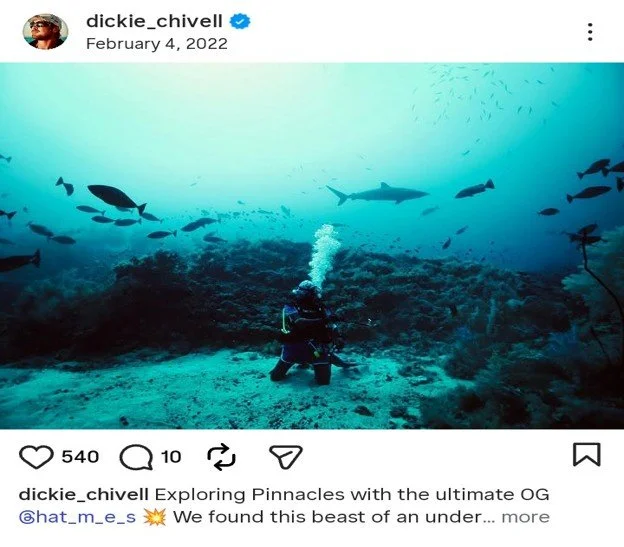
I chose a photo taken by Dickie Chivell of a diver kneeling on the ocean floor while schools of fish move all around him. Dickie is a conservationist, expert diver, and explorer known for his work on Shark Week, and his photography captures the kind of ocean life I hope to be part of someday.
This image immediately stood out to me because it shows the underwater world in a way that feels peaceful, alive, and untouched. It reminds me of how being underwater is the only place where I feel real silence, no headache, and a kind of calm I can’t find anywhere else.
The point of view in this photo is slightly above and behind the diver, which makes the viewer feel like they’re floating in the water with him. This angle also shows the depth of the scene, with the fish in the foreground and the darker water fading behind them. The lighting is natural and diffused, filtered through the surface, which matches what we learned in the Nature Photography materials about using available light to create mood.
The soft glow highlights the fish and the diver’s silhouette without overpowering the scene. The composition is strong because the diver anchors the bottom of the frame while the fish create movement across the middle.
The bubbles rising from the diver add texture, and the darker background helps the fish stand out. I like how calm the photo feels even though the ocean is full of motion. It captures the balance between stillness and energy that makes the ocean so meaningful to me.
Someday, I want to take my own underwater photos and share them online the way Dickie does, so people can see the beauty of what we’re losing and understand why it’s worth protecting.
This was an assignment from my last class, which was Art elective, that I chose (July 2026) photography. I really enjoy Dickie’s real life photos on his social media. If your not familiar with Dickie Chivell I will be posting a blog this weekend on his work in our conservation heroes section.
https://canva.link/s5fbhb6qmcoudam
This link is to my class webpage with many photos of my hometown. Thank you.
-
This was an assignment from my last class, which was Art elective, that I chose (July 2026) photography. I really enjoy Dickie’s real life photos on his social media. If your not familiar with Dickie Chivell I will be posting a blog this weekend on his work in our conservation heroes section.
Ocean Presentation for kids
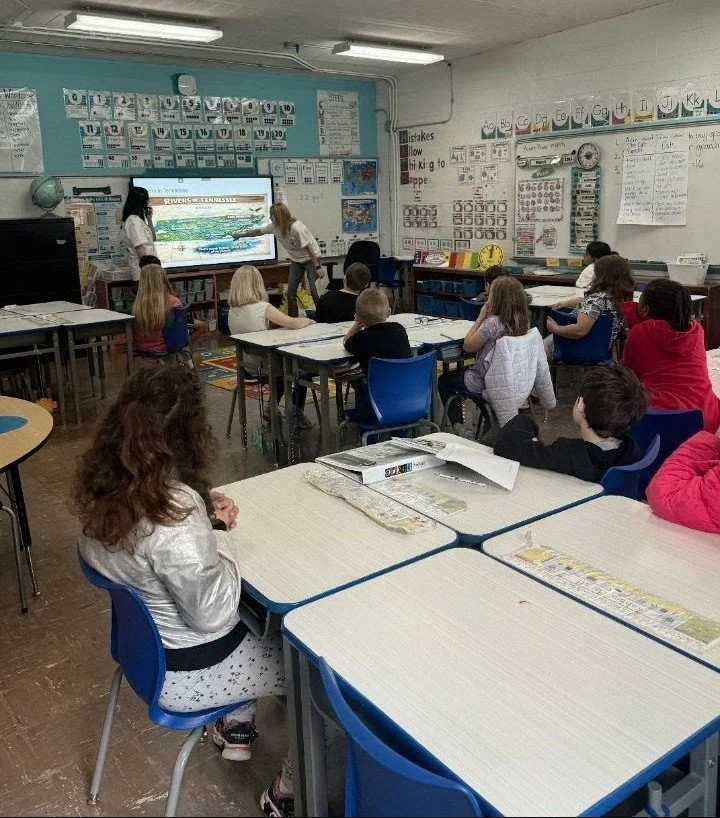
On March 31, 2026 we was given the honor of talking to the second grade class of Ms. Bollinger at Bowers Elementary.
Being in Tennessee our kids are not really taught about the ocean, or how the rivers connect to the ocean. No matter where you live it is important to teach our kids the importance of our water and it’s life.
The kids asked a lot of questions, for every slide and came out not fearing the ocean so much, which seems to be a common thing for children. It was a great experience for everyone. We are truly grateful for the opportunity.
With Deep Gratitude
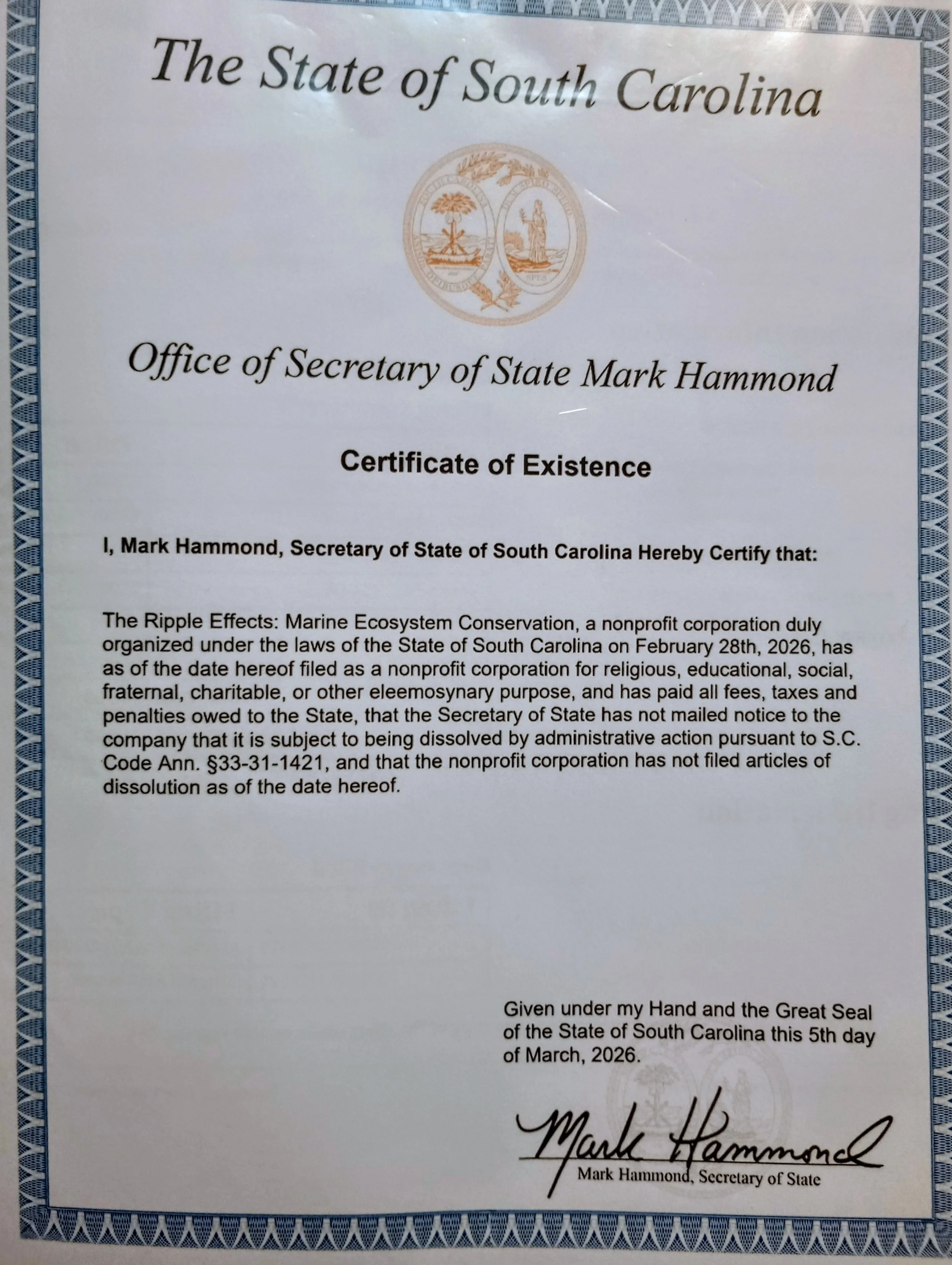
To every supporter, reader, encourager, and believer in The Ripple Effects — thank you.
Today we’re honored to share a milestone that reflects not just our work, but your faith in this mission:
Our official Certificate of Existence from the State of South Carolina.
This recognition marks a turning point. It affirms that our commitment to marine ecosystem conservation is no longer just a vision — it is a formally recognized organization with a growing purpose and a growing community behind it.
Your support has carried us through every step: the long nights, the research, the writing, the outreach, the planning, and the persistence it took to get here. Every share, every message, every moment of encouragement has created ripples that made this possible.
Thank you for standing with us as we continue building something meaningful — something that protects our oceans, educates our communities, and inspires action.
We’re just getting started.
With gratitude,
The Ripple Effects
Visit us on our social media sites:
Instagram @rippleeffectsorg
Facebook The Ripple Effects https://www.facebook.com/profile.php?id=61586639018016
Email: asuddath4@wwwtherippleeffect.com
phone: 864-302-0770 8a-5p
My Course project for COMM 301
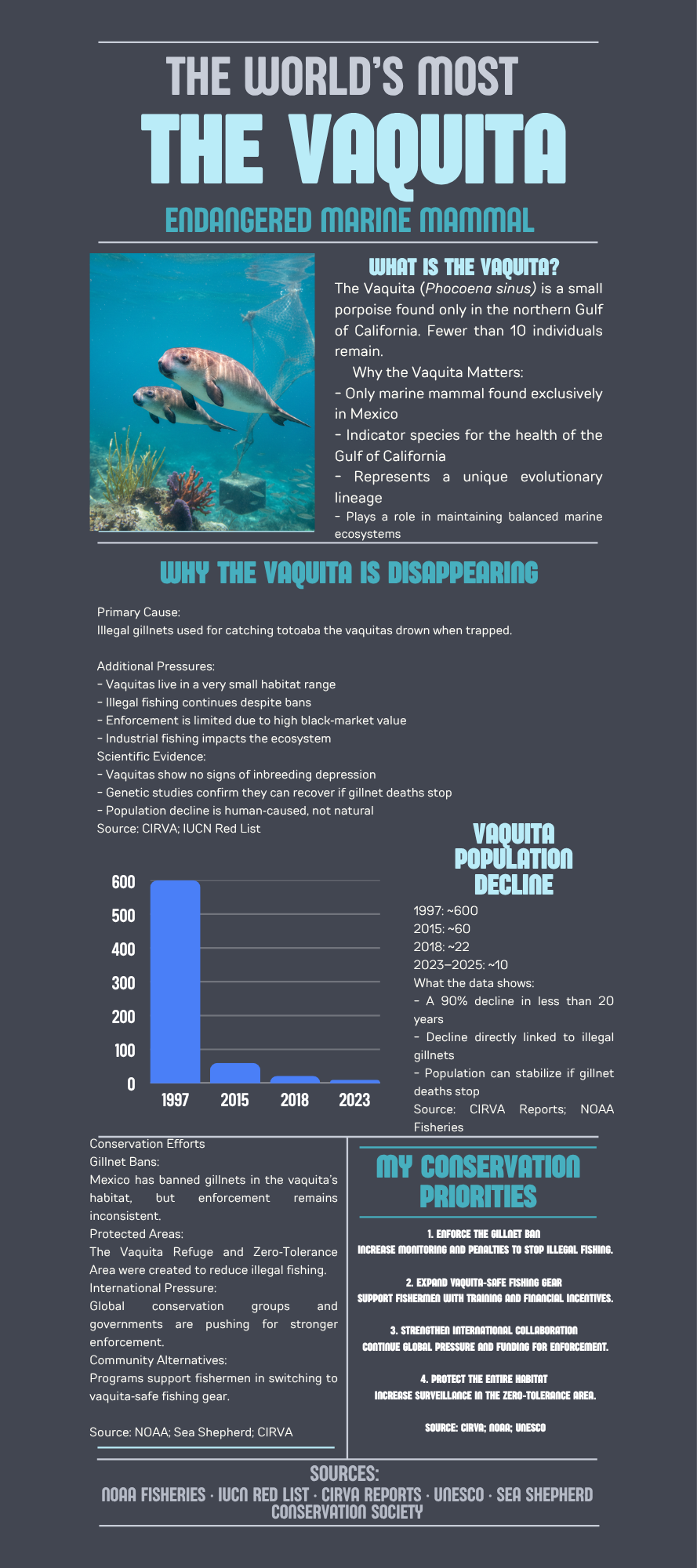
Marine Conservation in the Gulf of California: Vaquita Crisis- Key Facts and Communication Priorities
This document provides the preliminary research required for Week 1 of the Natura communication training project. The selected issue is Marine Conservation in the Gulf of California, with a focus on the critically endangered vaquita porpoise. This document identifies five key facts, three communication priorities, and credible sources that will support the infographic and the online training experience developed throughout the course. This research supports the development of communication tools aimed at informing the public and conservation trainees about immediate actions needed to prevent extinction.
Key Facts About the Gulf of California and the Vaquita
1. The Gulf of California is one of the most biodiverse marine regions in the world. The region contains approximately 900 fish species, including 90 endemic species, and hosts one-third of the world’s marine mammals (UNESCO World Heritage Centre, n.d.).
2. The region includes 244 islands and islets across major oceanographic zones. These islands form a natural laboratory for studying evolution, speciation, and ecological processes (UNESCO World Heritage Centre, n.d.).
3. The vaquita is the most endangered marine mammal on Earth.
Current estimates indicate that about 10 individuals remain, placing the species at immediate risk of extinction (World Wildlife Fund, n.d.).
4. Illegal gillnets used for totoaba fishing are the primary cause of vaquita mortality. Vaquitas become entangled and drown in these nets, even within designated marine protected areas (World Wildlife Fund, n.d.).
5. Industrial fishing and invasive species pose major threats to the Gulf’s ecosystem. UNESCO identifies industrial fishing as the largest ongoing impact on the marine environment (UNESCO World Heritage Centre, n.d.).
Training Module Link:
https://sites.google.com/view/therippleeffectsmarineconserv?usp=sharing
References:
UNESCO World Heritage Centre. (n.d.). Islands and protected areas of the Gulf of California. https://whc.unesco.org/en/list/1182/ (whc.unesco.org in Bing)
World Wildlife Fund. (n.d.). Vaquita. https://www.worldwildlife.org/species/dolphin-andporpoise/vaquita
National Oceanic and Atmospheric Administration (NOAA). (2024). Vaquita (Phocoena sinus). NOAA Fisheries. https://www.fisheries.noaa.gov/species/vaquita
International Union for Conservation of Nature (IUCN). (2024). Phocoena sinus: The IUCN Red List of Threatened Species. https://www.iucnredlist.org/species/17028/21451431 (iucnredlist.org in Bing)
Sea Shepherd Conservation Society. (2024). Vaquita conservation efforts. https://seashepherd.org
Smithsonian Ocean Portal. (2024). Vaquita: The world’s most endangered marine mammal. https://ocean.si.edu/ocean-life/marine-mammals/vaquita