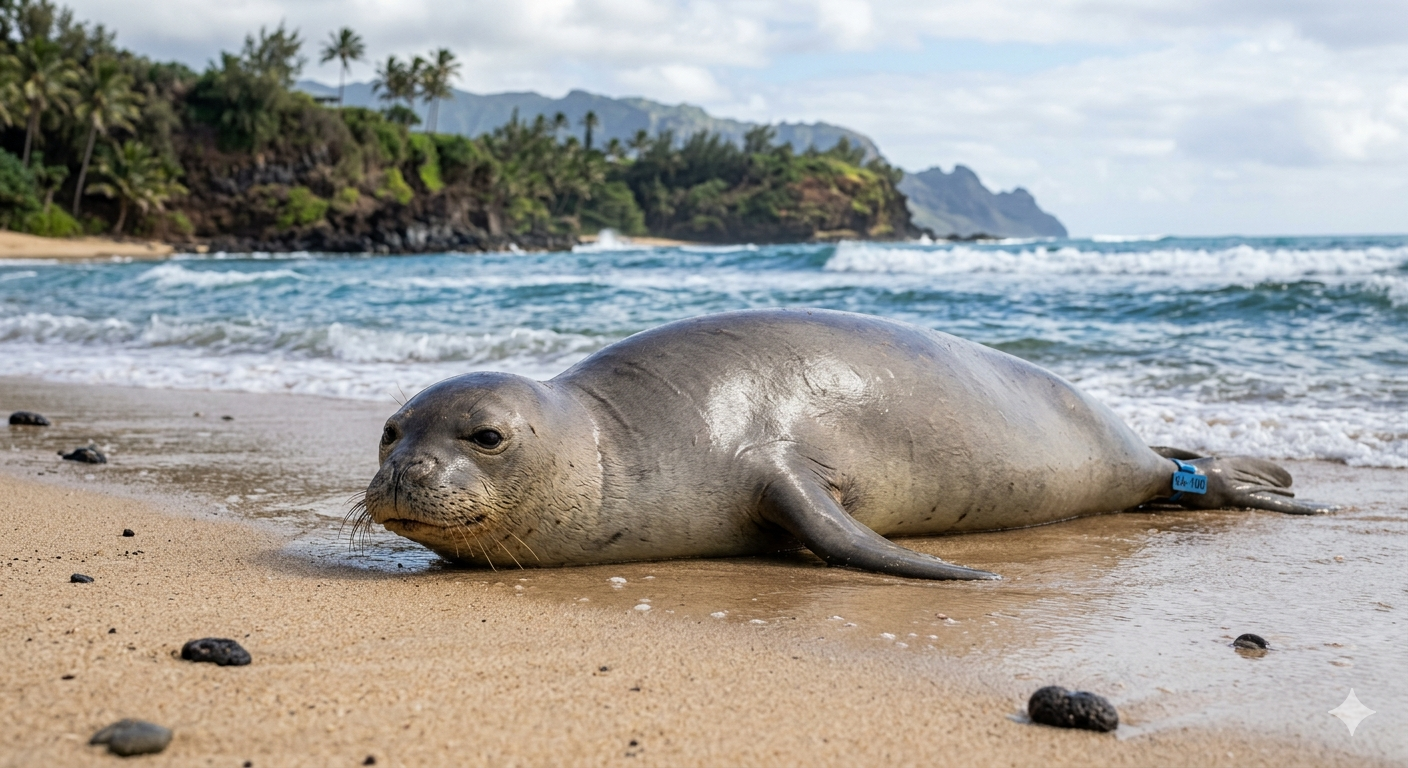
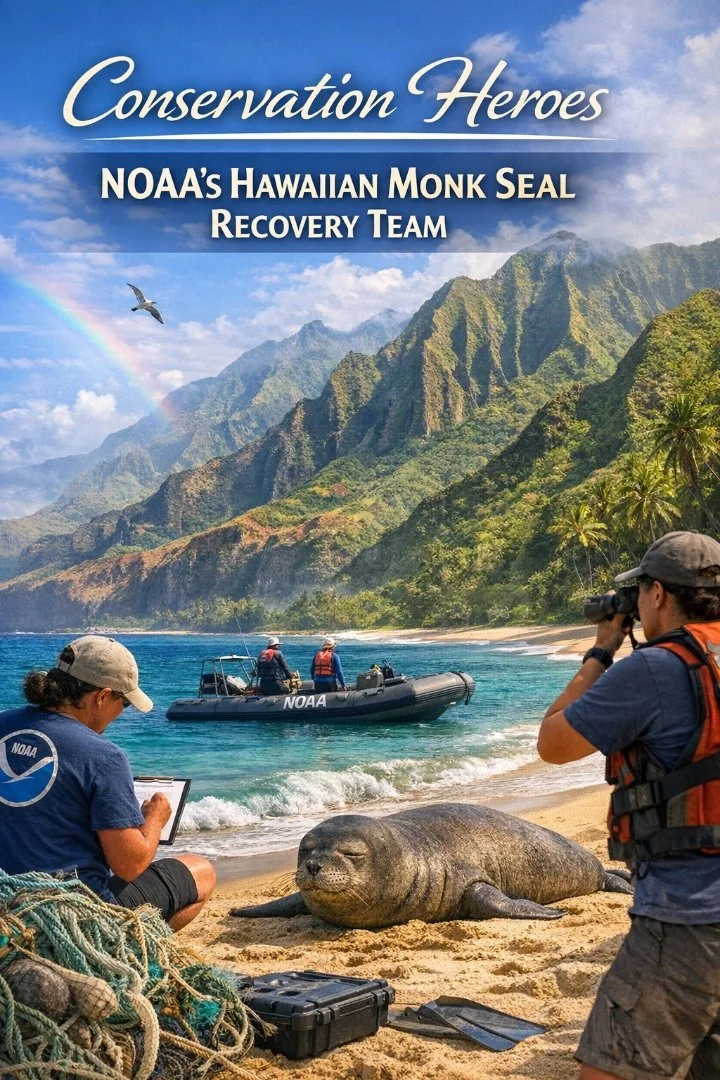
NOAA’s Hawaiian Monk Seal Recovery Team
References
NOAA Fisheries. (2024). Hawaiian Monk Seal.
https://www.fisheries.noaa.gov/species/hawaiian-monk-seal (fisheries.noaa.gov in Bing)
Pacific Islands Fisheries Science Center. (2025). Hawaiian Monk Seal Population Summary 2024.
https://www.fisheries.noaa.gov/pacific-islands/hawaiian-monk-seal-population-summary (fisheries.noaa.gov in Bing)
NOAA Fisheries. (2022). Hawaiian Monk Seal Population Surpasses 1,500!
https://www.fisheries.noaa.gov/feature-story/hawaiian-monk-seal-population-surpasses-1500 (fisheries.noaa.gov in Bing)
NOAA Fisheries. (n.d.). Threats to Hawaiian Monk Seals.
https://www.fisheries.noaa.gov/hawaii-marine-mammals/threats-hawaiian-monk-seals (fisheries.noaa.gov in Bing)
NOAA Fisheries. (n.d.). Hawaiian Monk Seal Recovery Efforts.
https://www.fisheries.noaa.gov/hawaii-marine-mammals/hawaiian-monk-seal-recovery-efforts (fisheries.noaa.gov in Bing)
The Hawaiian monk seal is one of the rarest marine mammals on Earth, and its survival depends on a small group of dedicated people working behind the scenes every single day. NOAA’s Hawaiian Monk Seal Recovery Team is one of the most important forces protecting this species from extinction. Their work spans the entire Hawaiian archipelago, from remote islands to busy public beaches, and every action they take is designed to give this species a fighting chance.
This team responds to injured or entangled seals, rescues abandoned pups, and rehabilitates sick animals so they can return to the wild. They monitor seal populations, track health trends, and study threats like marine debris, disease, and habitat loss. Their fieldwork is demanding — long days, remote camps, unpredictable weather — but their efforts have directly saved hundreds of seals over the years.
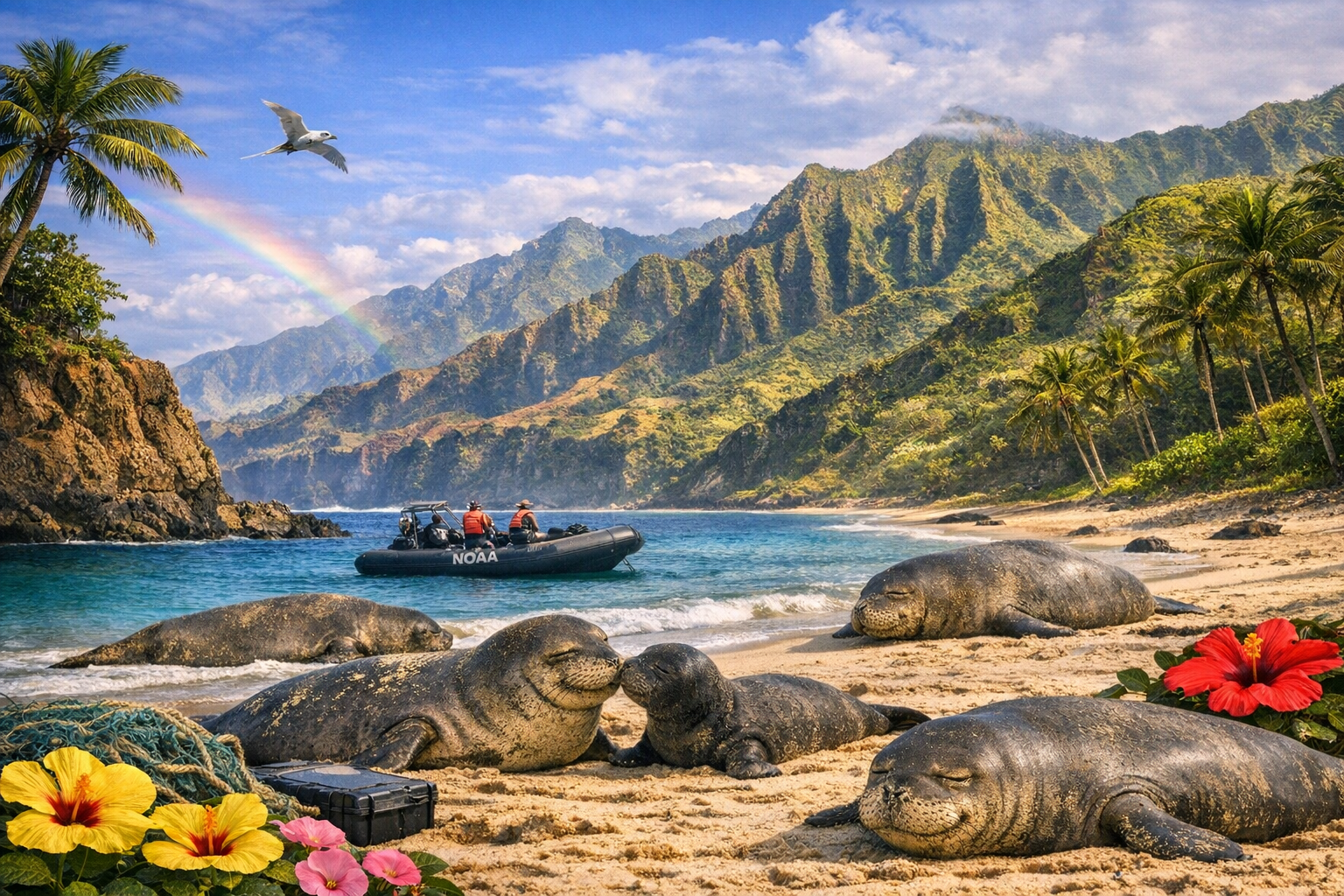
One of their biggest successes has been the rescue and rehabilitation of vulnerable pups. Without intervention, many of these young seals would not survive. Thanks to NOAA’s team and their partners, dozens of pups are now thriving adults contributing to the population’s slow but steady recovery. Their work proves that conservation isn’t just research — it’s hands‑on, life‑saving action.
Beyond rescue work, the team also leads public education and community outreach. They teach beachgoers how to give seals space, help reduce human‑wildlife conflict, and work with local communities to protect critical habitat. Every conversation, every cleanup, and every reported sighting strengthens the connection between people and the species that depend on them.
The Hawaiian monk seal still faces serious challenges, but NOAA’s Recovery Team shows what’s possible when science, compassion, and persistence come together. They are true conservation heroes — and their work reminds us that saving a species is never the job of one person, but the commitment of many.