Marine Megafauna Foundation (MMF)
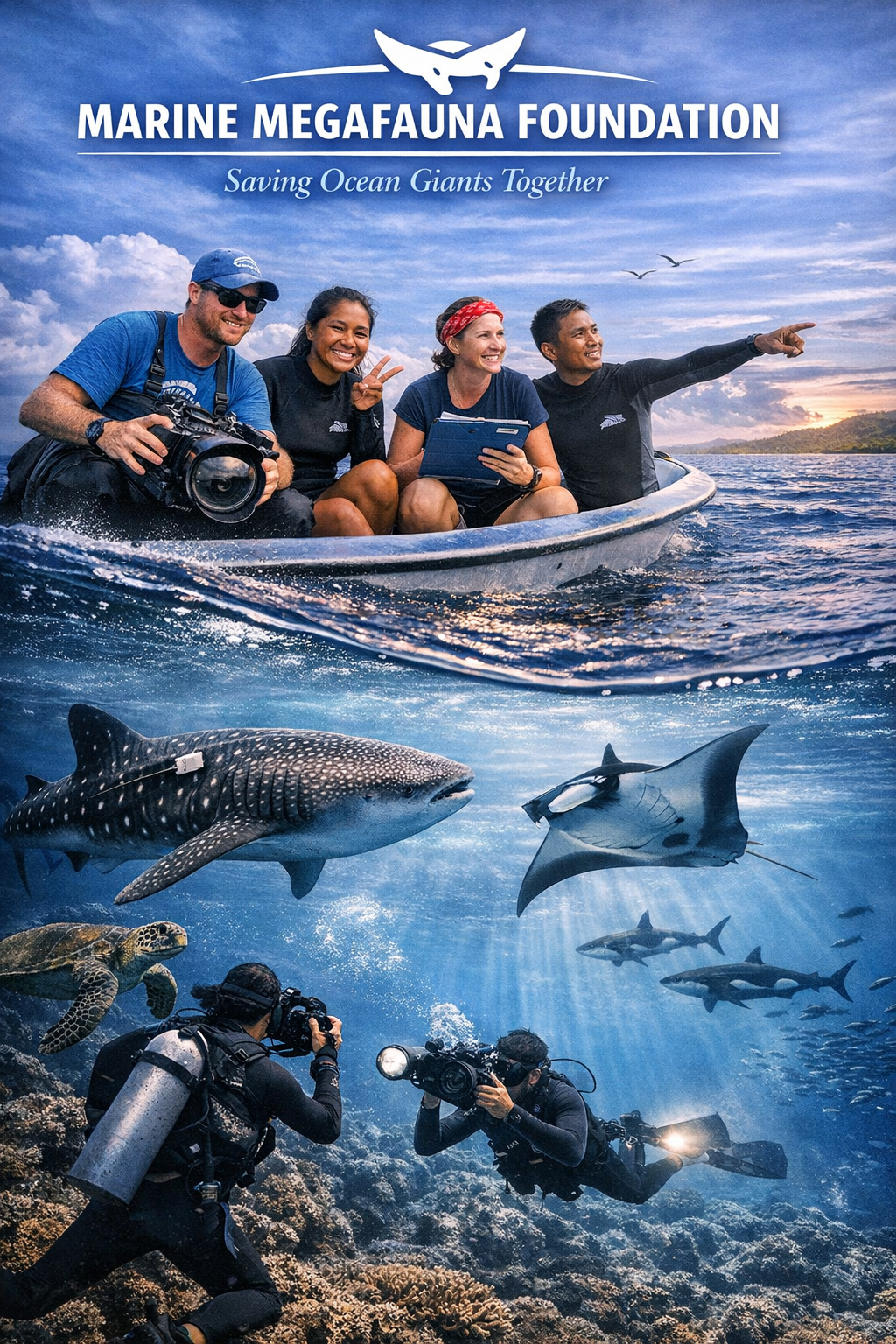
Founded by Dr. Andrea Marshall and Dr. Simon Pierce, MMF protects ocean giants like manta rays and whale sharks through research, education, and citizen‑science diving programs. Based in Mozambique with global outreach across Indonesia and Canada.
Marine Megafauna Foundation (MMF)
Organization: Marine Megafauna Foundation (MMF)
Location: Praia Tofo, Inhambane Province, Mozambique
Website: https://www.marinemegafaunafoundation.org
Email: info@marinemegafaunafoundation.org
Social:
- Instagram: @marinemegafauna
- Facebook: Marine Megafauna Foundation
- YouTube: Marine Megafauna Foundation
MMF Quick Facts:
Founded: 2009
Focus: Manta rays • Whale sharks • Ocean giants
Why They Matter:
MMF trains everyday divers to collect real research data — turning tourism into conservation.
By the Numbers:
- 12,000+ photo‑ID submissions
- 2,000+ manta rays identified
- 1,200+ whale sharks tracked
- 30+ countries contributing data
How Divers Help:
Take ID photos, log sightings, record depth & GPS, report injuries.
Global Hubs:
Mozambique • Indonesia • Canada
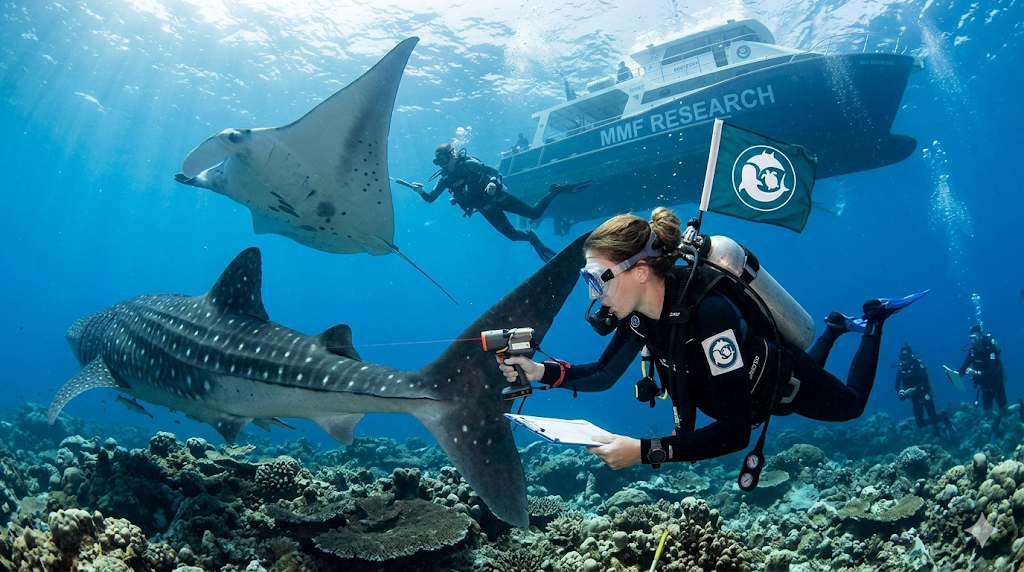
Empowering everyday divers to protect the ocean’s giants.
The Marine Megafauna Foundation (MMF) was founded in 2009 by marine biologist Dr. Andrea Marshall, known as the Queen of Mantas, and Dr. Simon Pierce, a whale‑shark specialist. Their mission is simple yet profound — to protect ocean giants like manta rays and whale sharks through research, education, and community engagement (Marshall & Pierce, 2010).
Teaching Divers to Become Citizen Scientists
MMF’s outreach programs train recreational divers to collect usable scientific data. Divers learn how to:
- Photograph manta rays and whale sharks for photo‑ID databases (MMF, 2023)
- Record GPS coordinates and depth for habitat mapping
- Log sightings and behaviors into open‑source research platforms
- Report injuries or entanglements to local conservation teams
This approach transforms tourism into science — every dive becomes a data point that helps researchers track migration, reproduction, and population health (Pierce et al., 2018).
Impact by the Numbers
- Over 12,000 citizen‑scientist submissions to MMF’s manta and whale‑shark databases (MMF, 2024)
- More than 30 countries involved in collaborative tagging and monitoring
- Whale‑shark population trends now measurable in Mozambique and Indonesia thanks to diver‑collected imagery
- Manta‑ray protection laws enacted in multiple nations following MMF research (Marshall et al., 2019)
By teaching divers to observe, record, and report, MMF bridges the gap between recreation and conservation. It proves that ocean protection isn’t limited to scientists — it’s powered by anyone willing to look closer, log carefully, and care deeply.
References & Further Reading
Marine Megafauna Foundation — Official Research & Programs
https://www.marinemegafaunafoundation.org
Marine Megafauna Foundation — Education & Community Initiatives
https://www.marinemegafaunafoundation.org/education
Marine Megafauna Foundation — Whale Shark Conservation
https://www.marinemegafaunafoundation.org/whale-sharks
Marine Megafauna Foundation — Manta Ray Research
https://www.marinemegafaunafoundation.org/manta-rays
UNESCO — Ocean Literacy & Community Science Programs
https://oceanliteracy.unesco.org
NOAA Fisheries — Whale Shark Species Profile
https://www.fisheries.noaa.gov/species/whale-shark
NOAA Fisheries — Manta Rays Overview
https://www.fisheries.noaa.gov/species/manta-ray
PLOS One — Citizen Science Accuracy in Marine Monitoring
https://journals.plos.org/plosone
(Peer‑reviewed studies showing high accuracy of citizen‑collected ecological data.)
IUCN Red List — Manta Rays & Whale Sharks Status
https://www.iucnredlist.org
