From Tennessee to the Deep Blue Sea
In Tennessee, water is everywhere-rivers, lakes, creeks, and the quiet webs of watersheds that eventually lead to the ocean. It might be far from the beach, but the ocean is closer than you think. It all leads to the sea eventually. Yet for many kids here, the ocean feels distant, almost imaginary, It’s not part of the school curriculum or daily conversation.
When we asked Brooklyn, age 10, what she learned about the ocean in school, she shrugged and said “They don’t talk about it much”.
Why Learning About the Ocean Matters Now
What we learn (or don’t learn) when we are young shapes how we treat the planet as adults. Teaching kids about the sea:
-Build Empathy: It helps you care about ecosystems you can’t see.
-Connects your Actions: It shows how what you do at home affects distant places.
-Creates Leaders: It prepares you to be the future voters and citizens who care.
During our interview, Brooklyn shared some simple, honest, and deeply human thoughts:
The ocean makes her feel calm, there is five of them, she thinks it’s pretty and really cool, she loves the fish and wants to visit the shallow parts soon. She knows people shouldn’t throw trash in it because “trash cans were made for a reason”.
Even though Brooklyn wants to help, she doesn’t always know how kids can make a difference. That is where the adults in our lives come in to help fill the gaps.
Ocean literacy isn’t just about naming the five oceans. It’s understanding that:
The ocean produces over half of the oxygen we breathe
It regulates climate and weather
It supports the food chain that supports us
It’s connected to every river and stream, even here in Tennessee
But kids aren’t being taught this. Not in science. Not in social studies. Not anywhere.
And yet, kids want to learn.
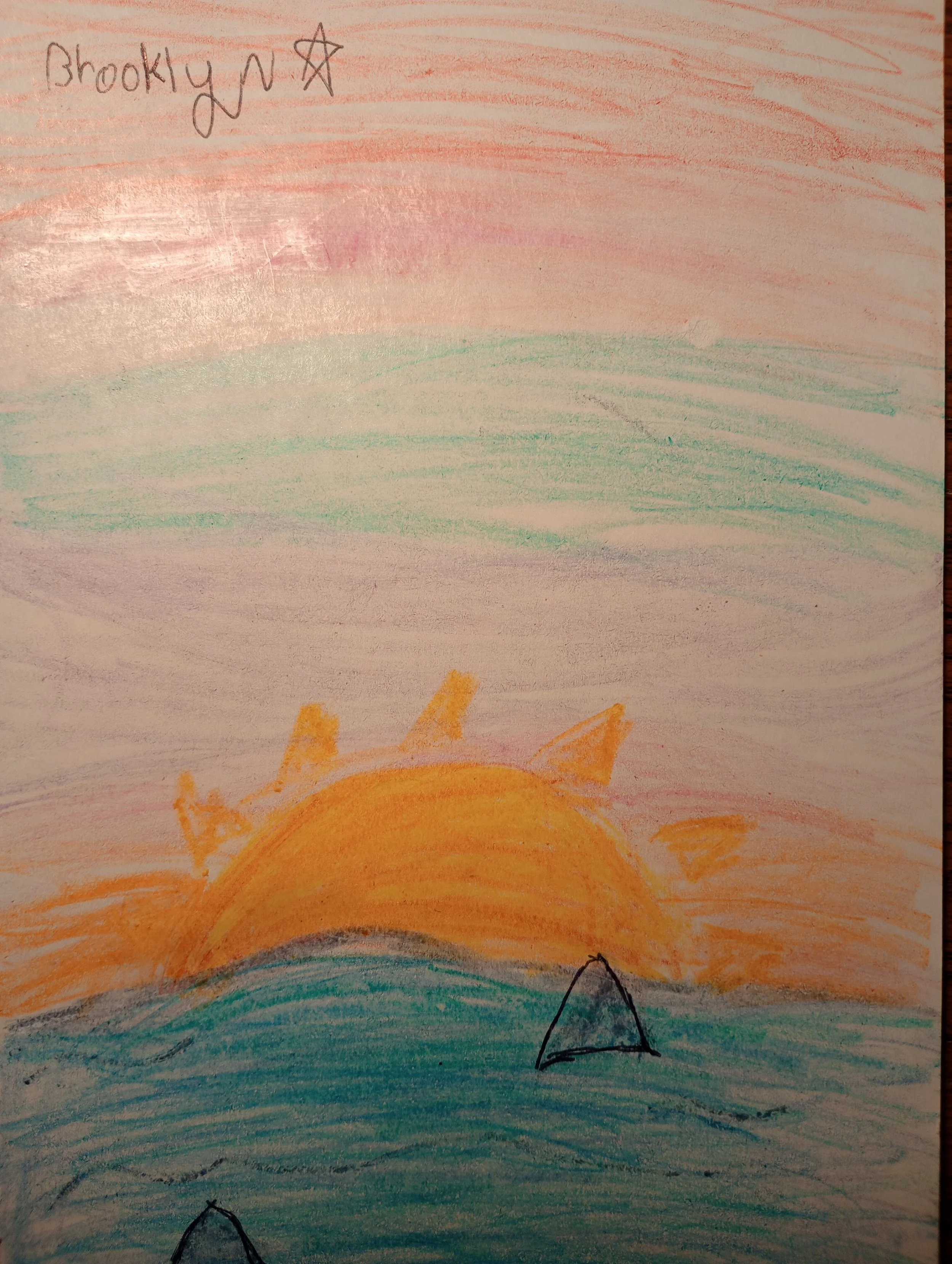
Imagine of the ocean from a 10 year old’s perspective
Brooklyn already knew the ocean isn’t actually blue - she learned that from a YouTube channel called Be Amazed. That detail matters. It shows that children are naturally curious, and when school doesn’t give them answers, they go searching for them on their own.
It’s not a failure on Brooklyn’s part that she didn’t know these things. It’s a failure of the system - and a reminder that parents, caregivers, and educators have to fill the gaps.
We can’t assume schools with teach environmental literacy. We can’t assume kids will “learn it eventually.” We can’t assume the ocean is too far away to matter.
Because the truth is simple:
The ocean shapes every breath we take, no matter where we live.
And if we want the next generation to protect it, we have to start teaching them early - gently, honestly, and consistently.
There are only about 70,000 marine biologists in a world of billions. This means most of what we don’t know about the ocean still outweighs what we do know. Your questions, your wonder, and your honestly remind us that the future of the ocean depends on what we choose to learn together, right now.
Minor Perspective exists to bring children into the conversation - not as an afterthought, but as the generation who will inherit the ocean we leave behind.
